
Surfaces
Cladding that gives a plain wall depth, texture and protection
A plastered wall is flat and does one job. Cladding puts a second layer over it, so the TV wall or the foyer gets grain, shadow and colour inside, and the outside of the house gets a skin that keeps rain and sun off the wall itself.
- Interior finishes
- Fluted wood panels, veneer, laminate, stone, mosaic, brass inlay
- Exterior materials
- Natural stone, wood boards, vinyl, aluminium
- Stone options
- Slate, sandstone, marble, granite, limestone, quartzite
- Wood boards fitted
- Horizontally, vertically or diagonally
- Where it goes
- TV walls, foyers, staircases, wash areas, balconies and soffits
Inside, cladding is what makes a wall the feature
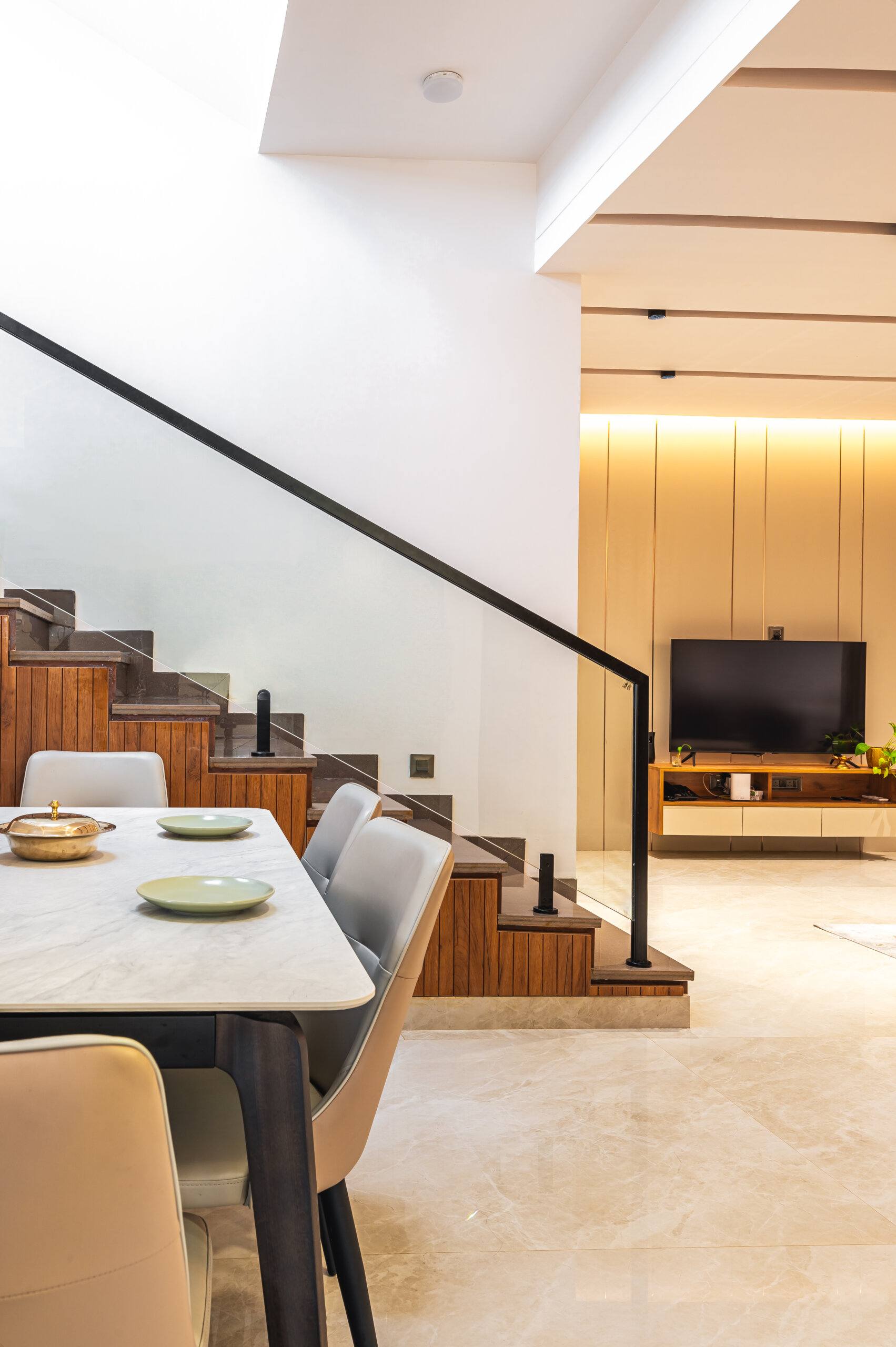
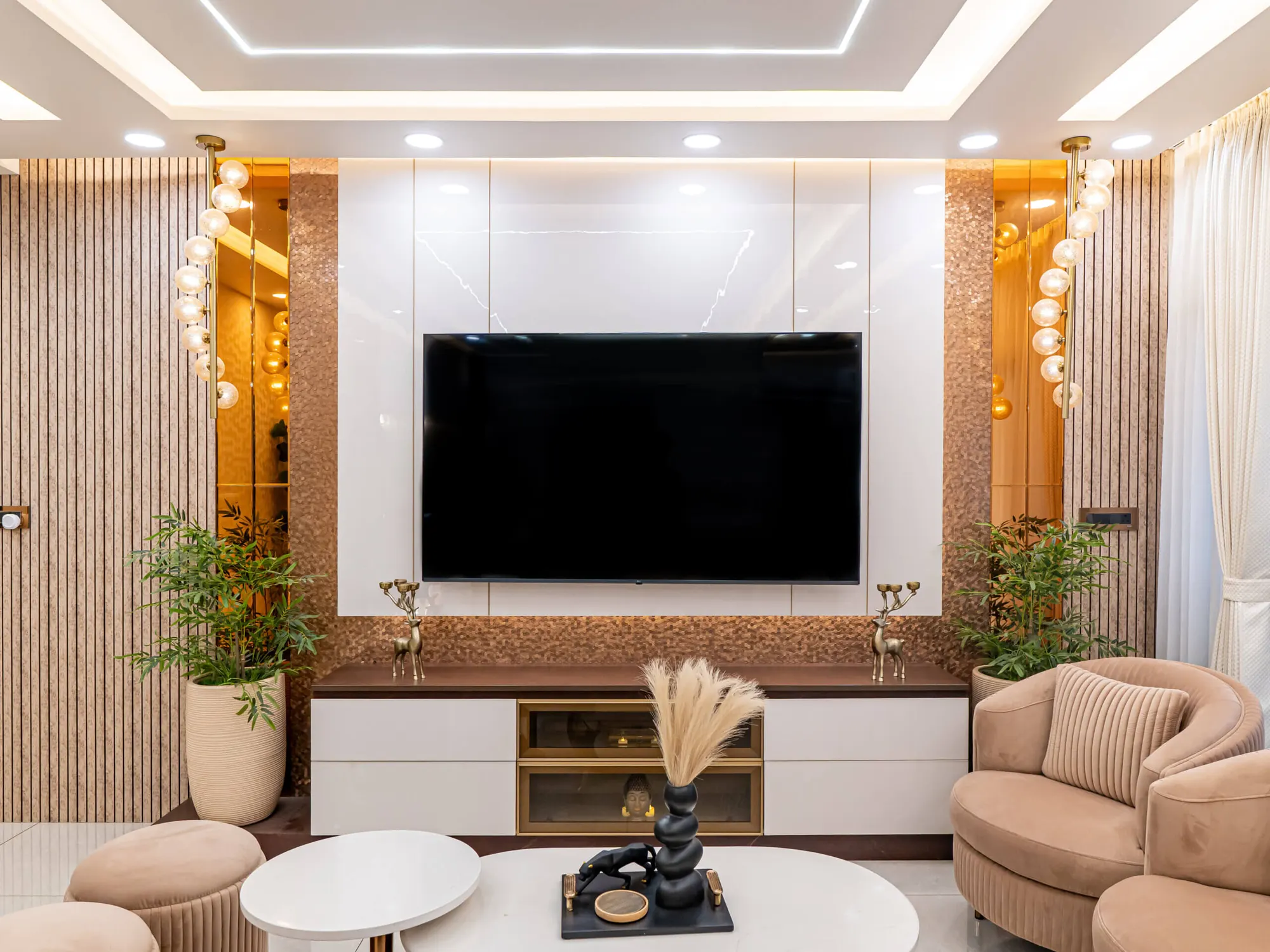
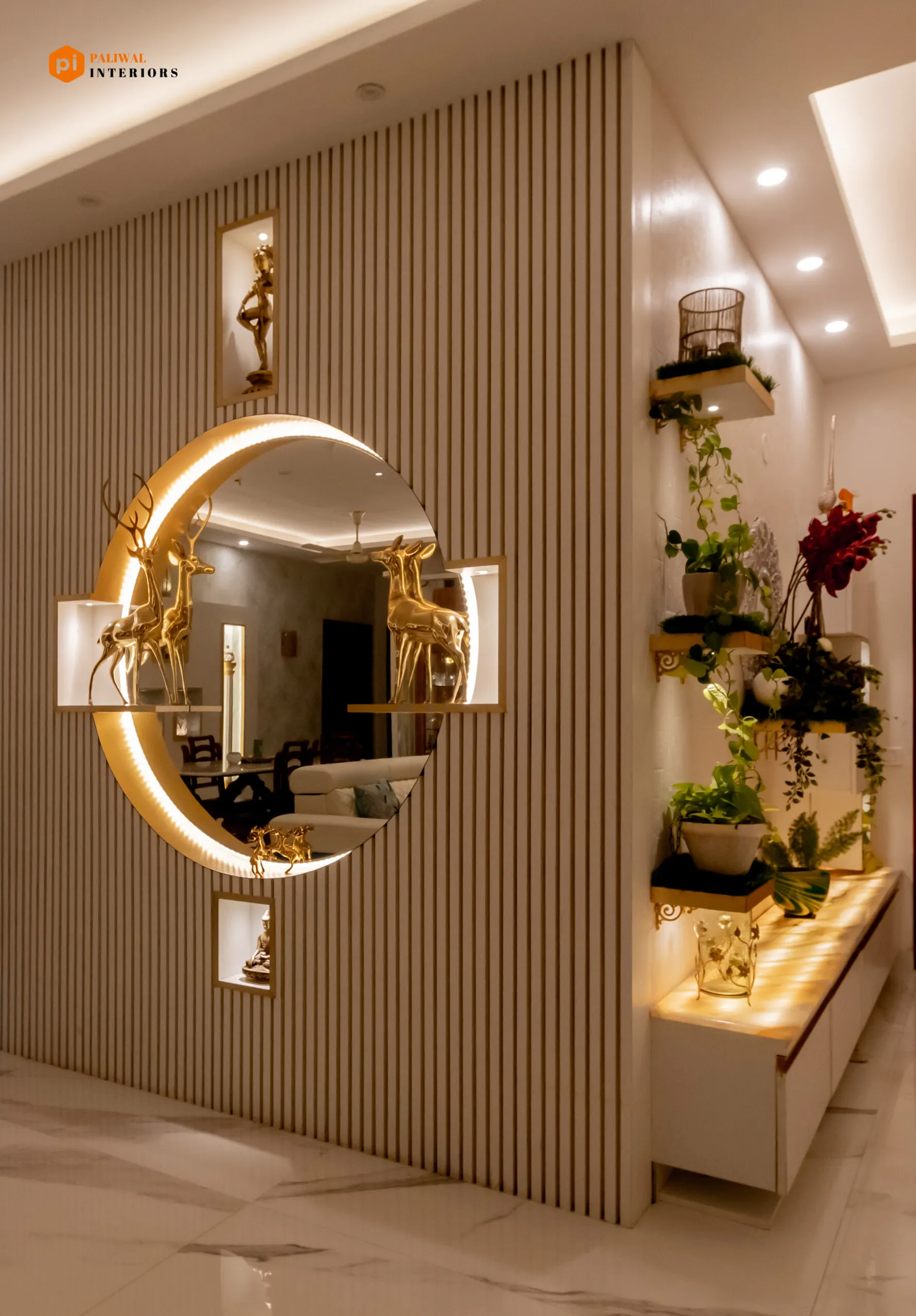
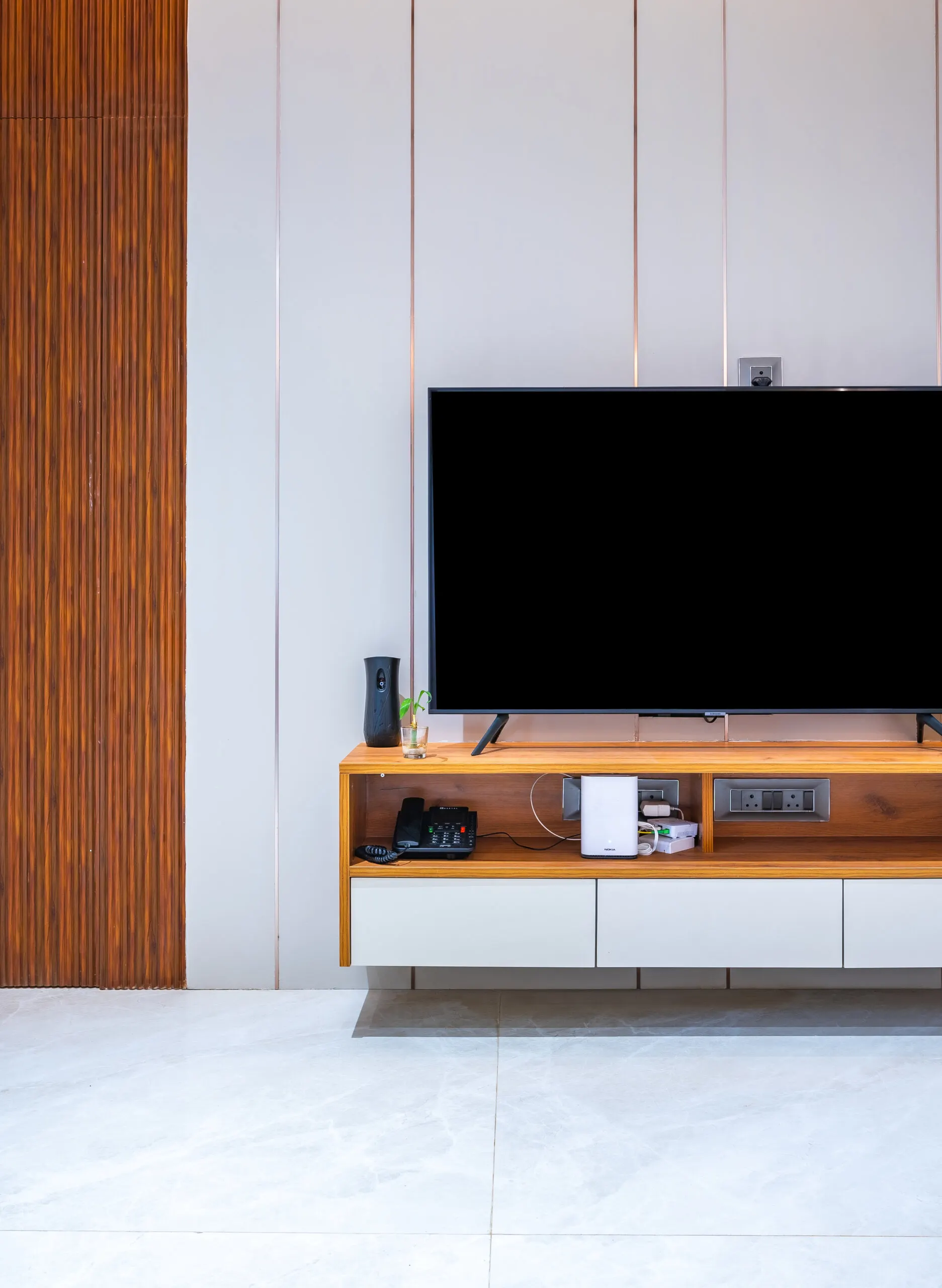
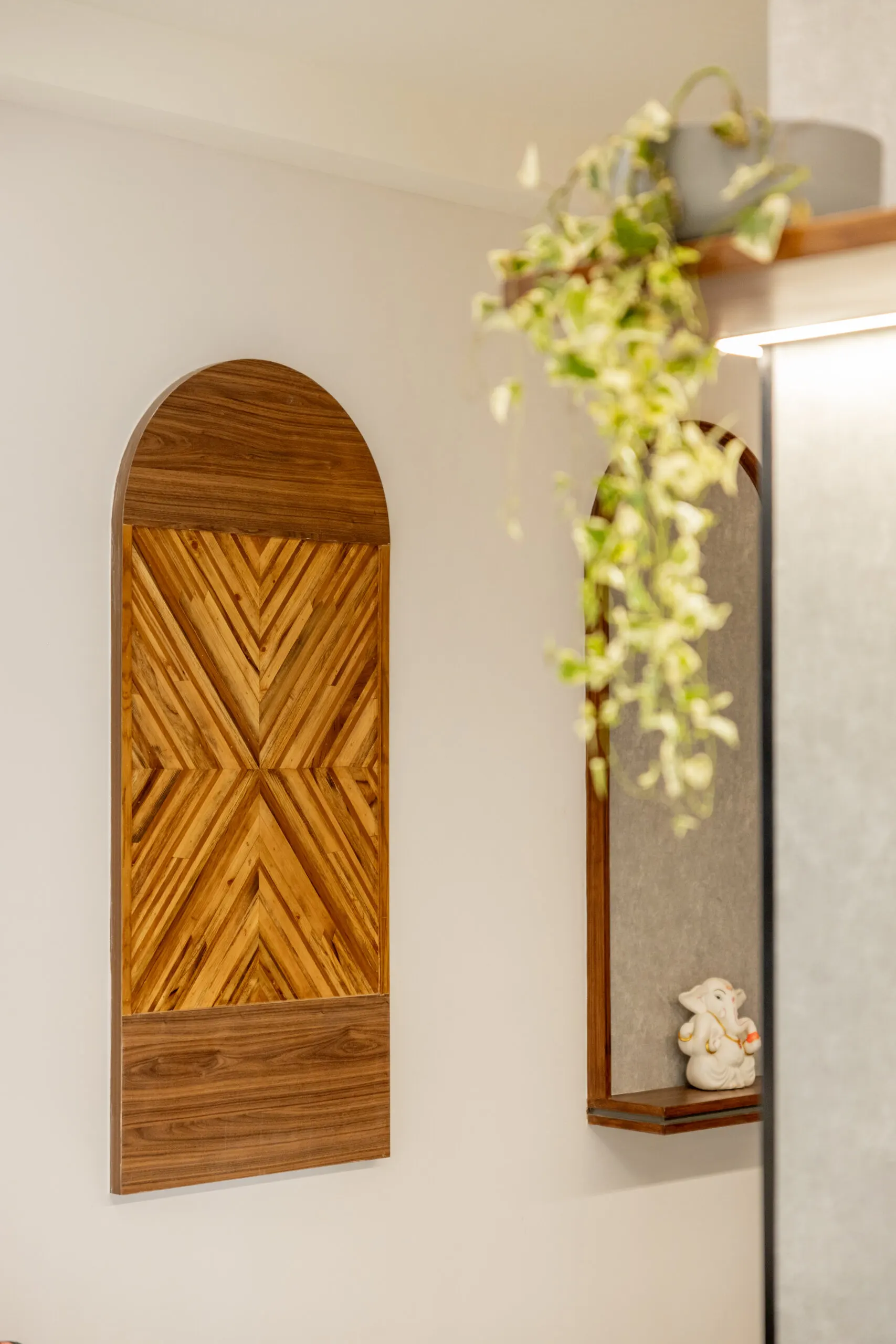
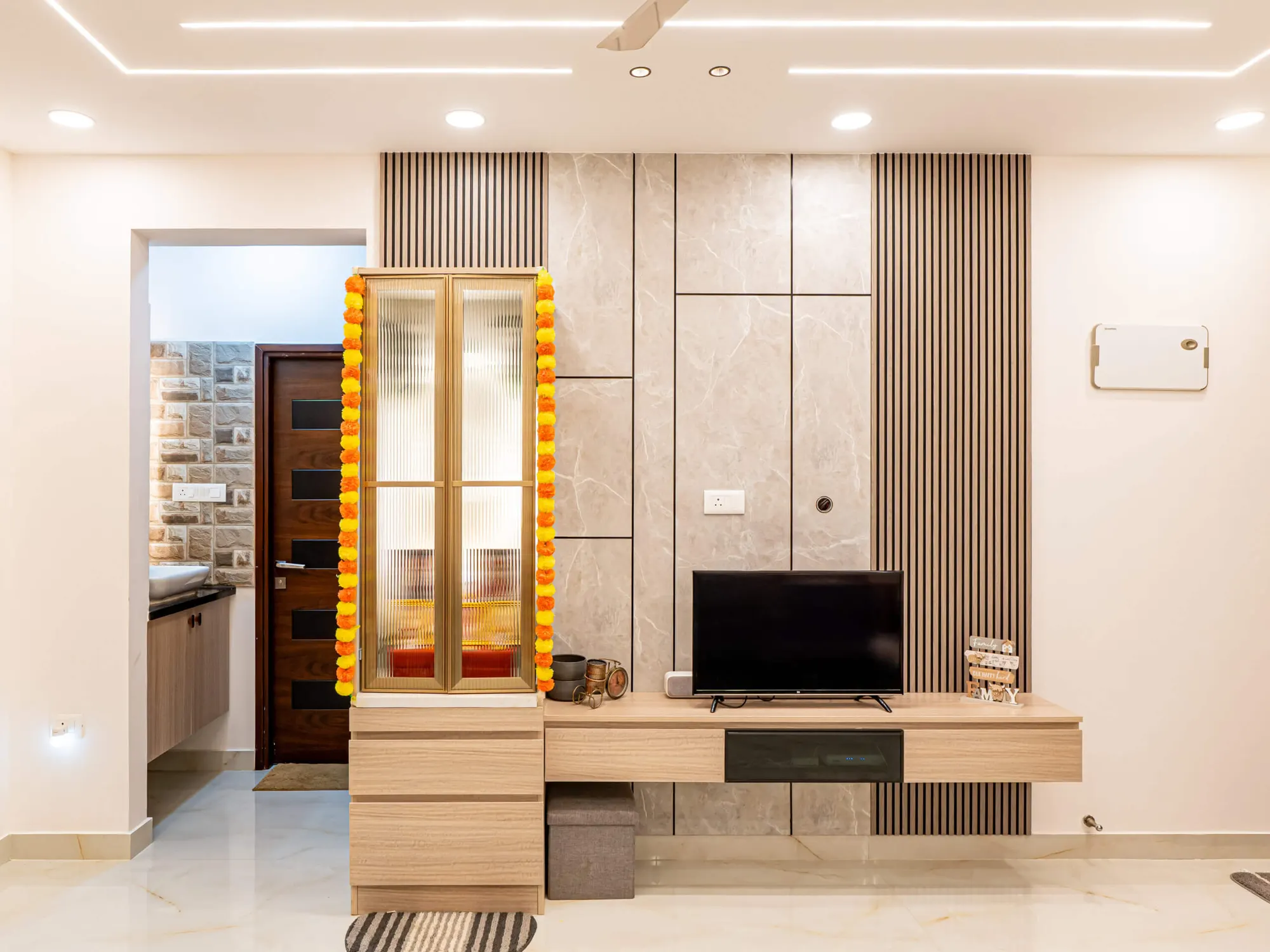
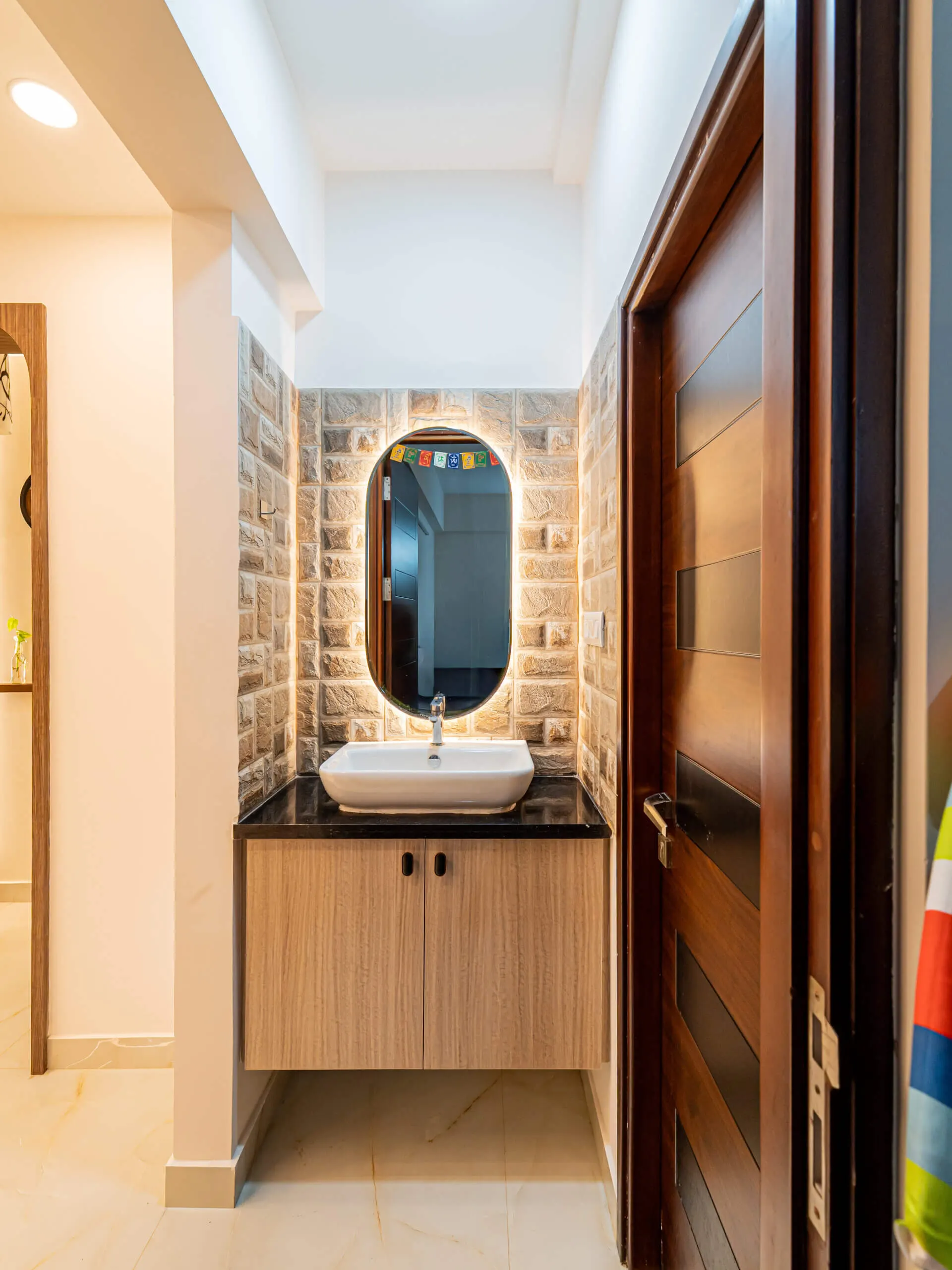
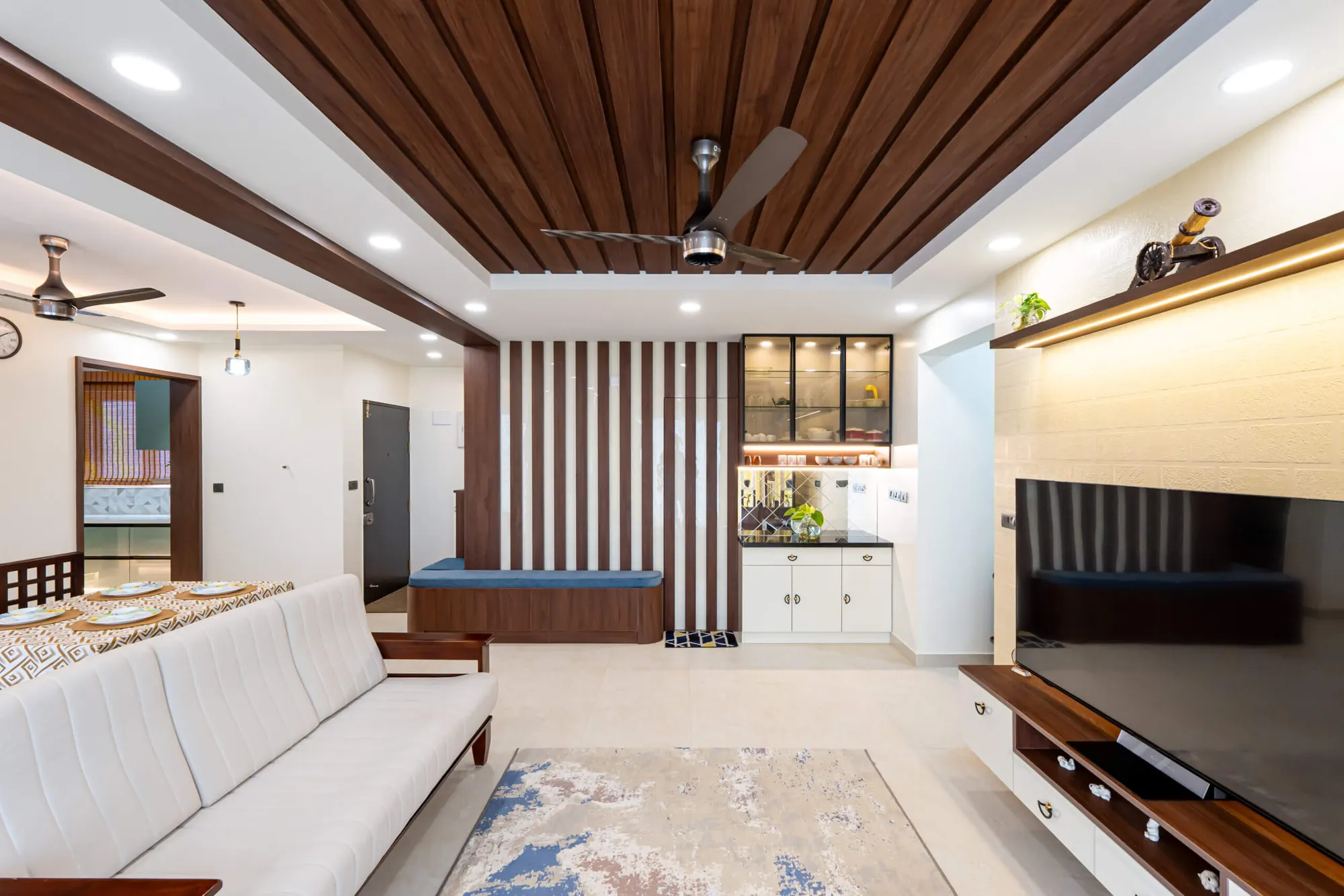
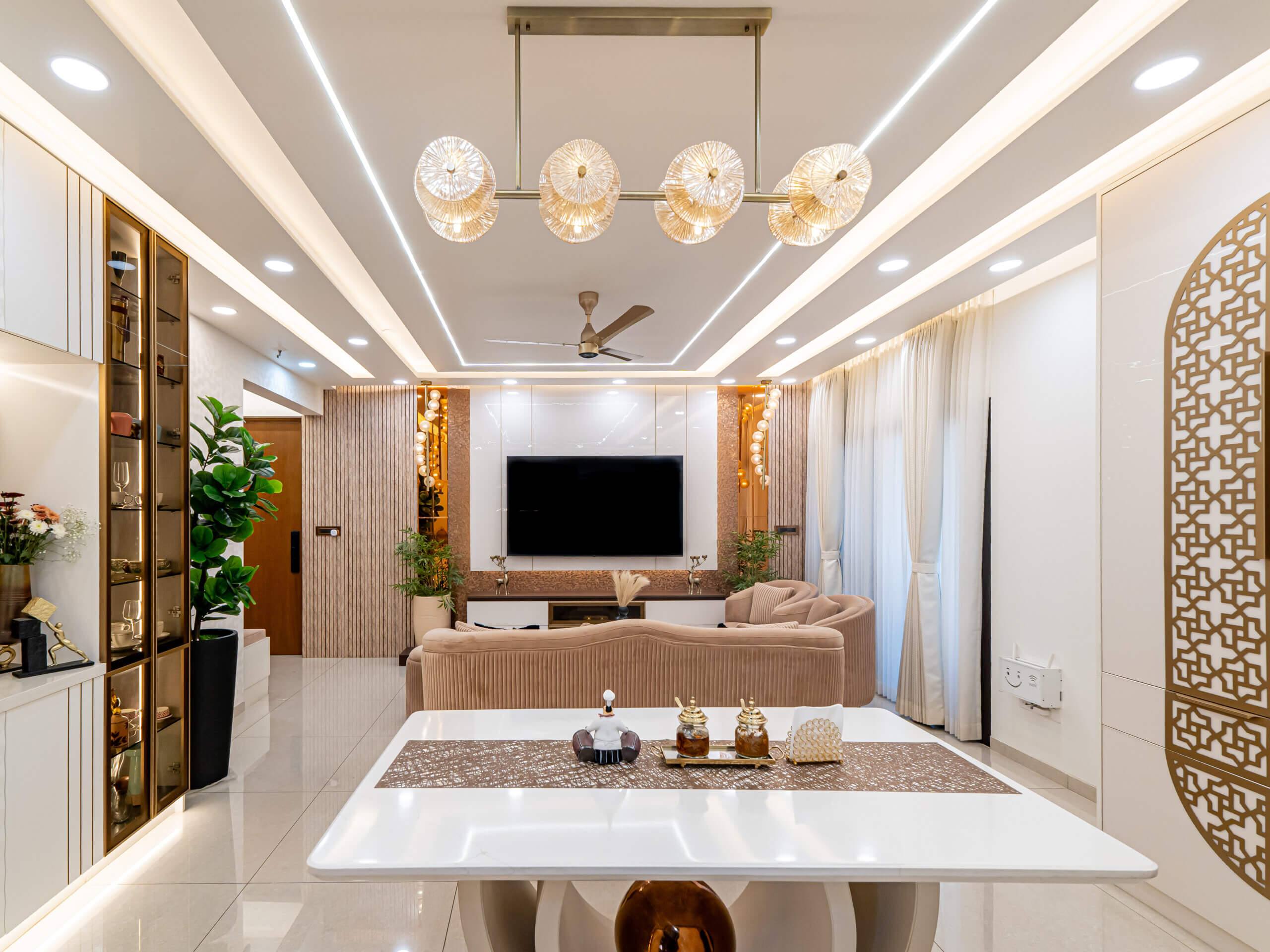
The TV wall, the foyer partition and the wall behind the dining table are the surfaces everyone looks at. Paint and wallpaper colour them; cladding gives them relief. The photos on this page show the range we fit in Bangalore homes: vertical fluted wood panels beside a high-gloss white TV wall, copper mosaic strips with mirrored niches, a cream fluted partition with a backlit crescent mirror, a chevron-patterned teak veneer arch in a foyer, white panels with thin brass inlay lines, and a rough stone wall behind a wash basin.
Each of those is a different material fixed over an ordinary plastered wall. Which one suits your wall depends on what is in front of it, how much light the room gets and how much pattern you want to live with every day.
Fluted panels, veneer, laminate, stone and mosaic
- Fluted wood panels: the vertical grooves catch light from a cove or a window and give a flat wall shadow lines. They work as a full wall, as a pair of side strips framing a TV, or as a partition between the foyer and the living room, as in the Prestige Shantiniketan home above.
- Veneer is real wood on a board. Laid plain it reads as a warm panel; cut and laid in a chevron, as in the arched foyer panel, it becomes a piece on its own.
- Laminate in a marble pattern gives the look of stone on a TV wall without the weight, and takes fluted strips and a floating console well.
- Natural stone is heavier and rougher, and suits a wash area or a passage where you want the texture at arm’s length.
- Mosaic and inlay are the detail layers: copper mosaic strips beside a glossy panel, or brass lines set into white panels, which break a large wall into proportions.
Plan the panel together with the TV unit, pooja unit or shoe bench that sits in front of it, so the panel joints line up with the furniture.
Outside, cladding is a skin that keeps the weather off
Cladding places one material over the wall so the wall itself is not what gets wet or hot. It reduces water absorption, improves thermal insulation, resists sun and summer heat, adds to the mechanical strength of the structure, improves resistance to cracking as temperatures rise, and gives some sound insulation. It also changes how the house looks from the road.
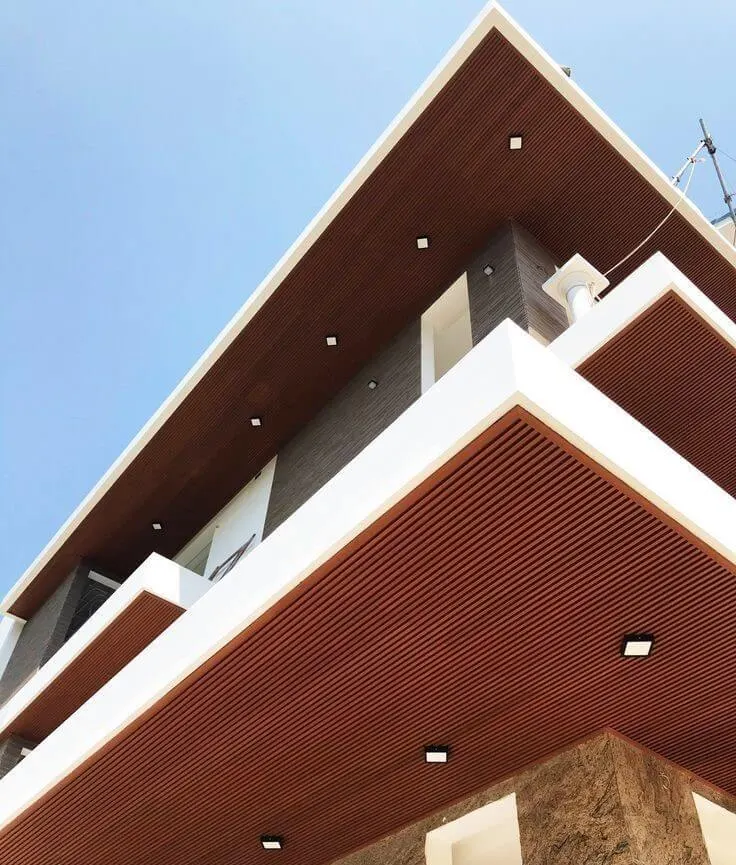
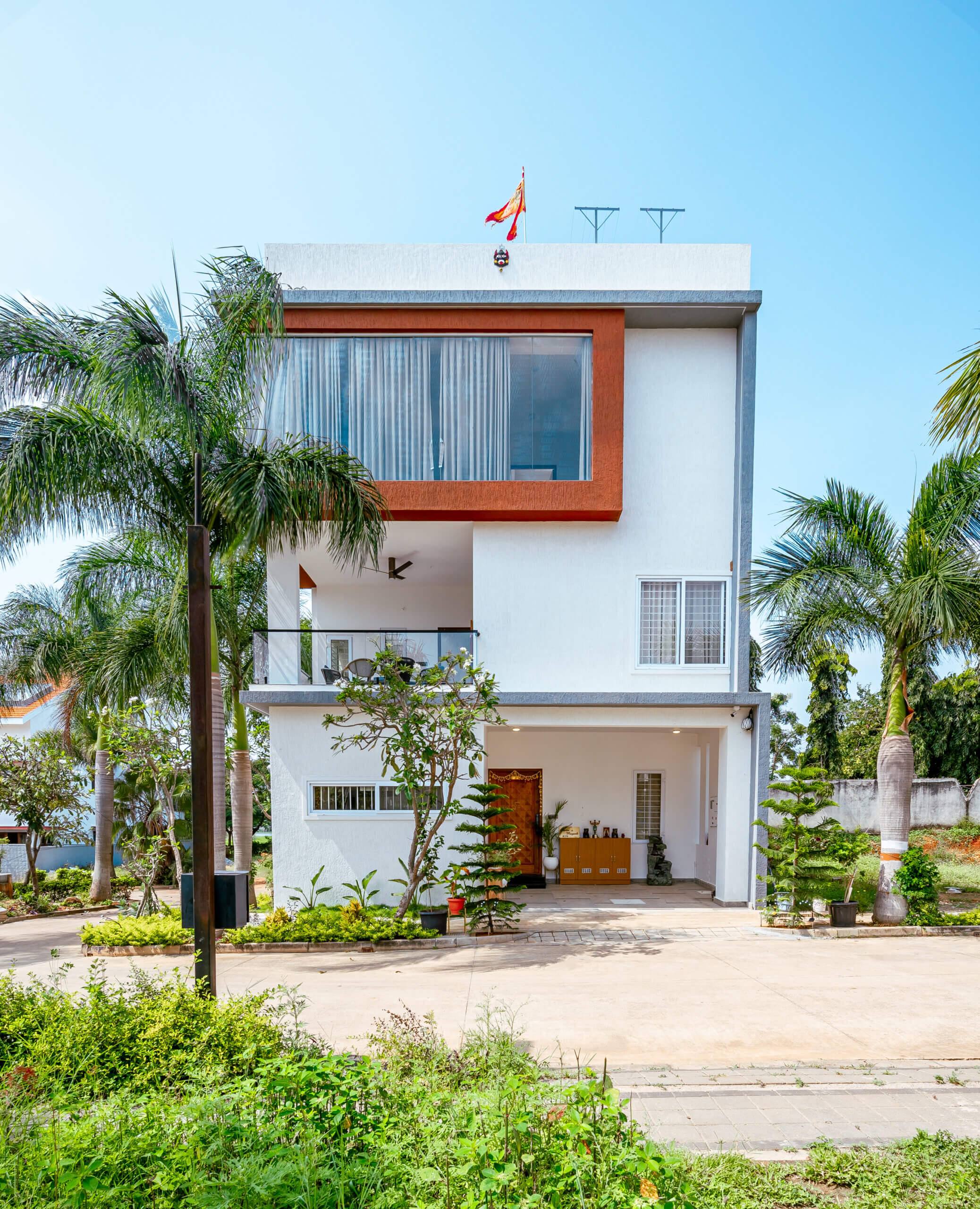
The exterior photo above shows wood-finish slatted cladding on the balcony soffits of a house, white fascia bands, stone-look cladding on the walls and stone at the base.
Natural stone, wood, vinyl or aluminium
- Natural stone: slate, sandstone, marble, granite, limestone or quartzite, fixed to concrete or steel. Pieces are laid in courses, from 2 rows up to 15. The price depends on the stone and on the size and shape of the pieces. Stone gives a house a feeling of warmth.
- Wood: long, narrow boards fitted horizontally, vertically or diagonally. Weather-resistant, a good insulator, and the one that gives you the most control over the final pattern. The same boards serve for decking and flooring.
- Vinyl: the budget choice, now made as wood-look weatherboard with realistic grain textures, in many colours. It is durable and saves money both at installation and later.
- Aluminium: about a third of the weight of steel, lasts for decades, can be formed into most shapes, sizes and finishes, and is fully recyclable without losing quality.
What to decide before we start
Three questions settle most cladding jobs. Which wall, and what sits in front of it: a TV, a bench, a basin, or nothing. How much pattern: a fluted strip either side of a plain panel is quieter than a full fluted wall. And for exteriors, which material: stone, wood, vinyl or aluminium, with vinyl as the budget choice. Bring those answers, or a photo of a wall you like, when you ask for an estimate.
The work
Wall cladding, as built.
8 photos · tap to enlarge
Walkthroughs
Filmed on handover day.

Before you call
Questions people ask us
Is cladding only for the outside of a house?
No. Inside, cladding is the fluted panel, veneer, stone or mosaic layer that makes a TV wall or foyer the feature of the room. Outside, it is the weather skin over the structure. The materials and the fixing method differ, but the idea is the same, one material placed over another.
Which stones can be used for cladding?
Slate, sandstone, marble, granite, limestone and quartzite. The cost depends on which stone you choose and on the size and shape of the pieces. Stone can be fixed to a concrete or a steel surface.
Does exterior cladding actually protect the wall?
Yes. It stands between the wall and direct sun, rain and heat, reduces water absorption, improves thermal insulation and adds sound insulation. It also protects the structure from the cracking that heat causes.
Can wooden boards go on an outside wall?
Yes. Wood cladding is fitted in long, narrow boards, horizontally, vertically or diagonally, and is weather-resistant and a good insulator. The same boards can be used for decking and flooring.
Often done together
Related services
Tell us about your home.
A site visit, a 3D design and an itemised estimate, free. Most homes are handed over in 45 to 60 working days.