
Ceilings
Ceilings that hide the wiring and carry the light
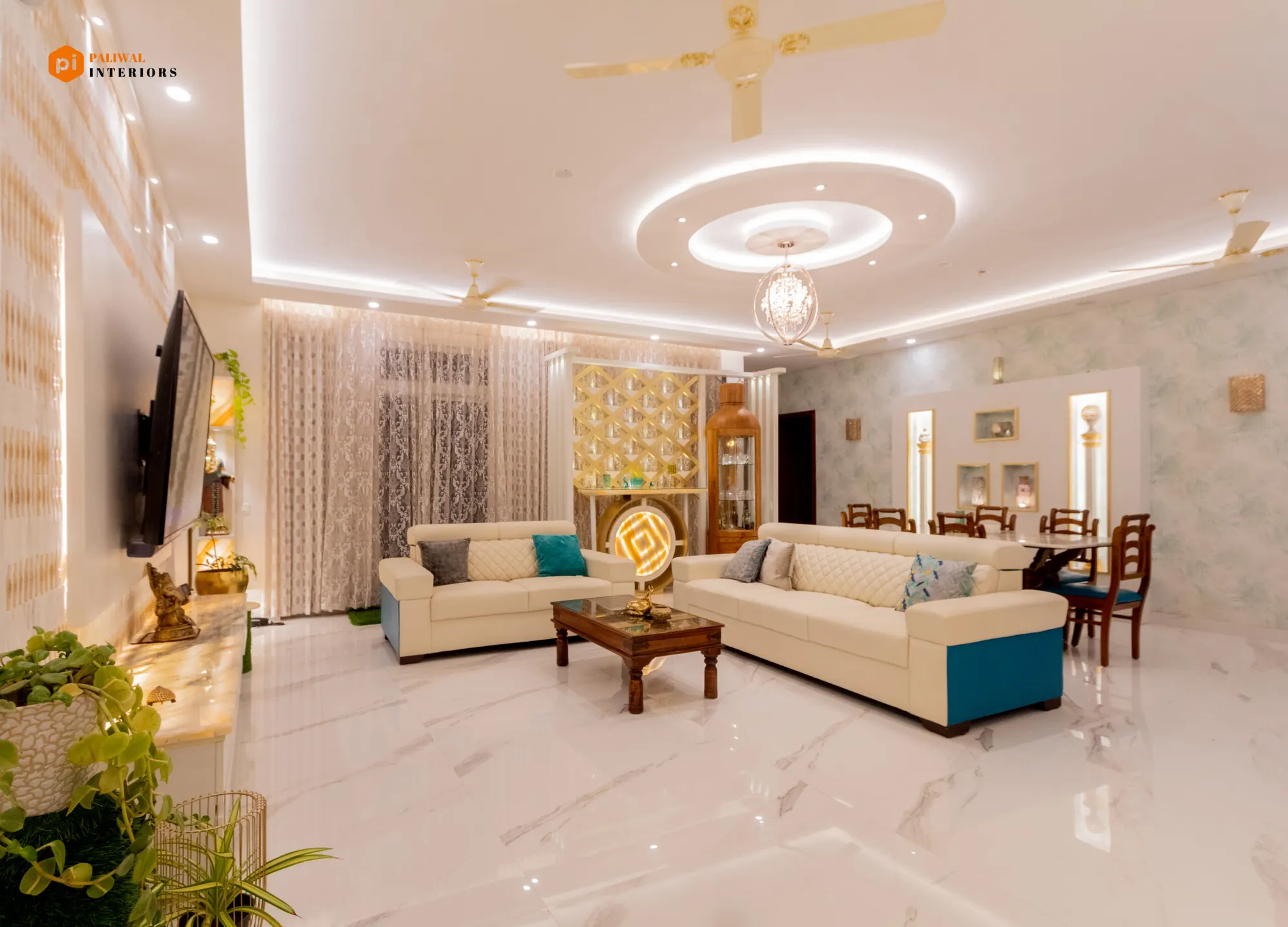
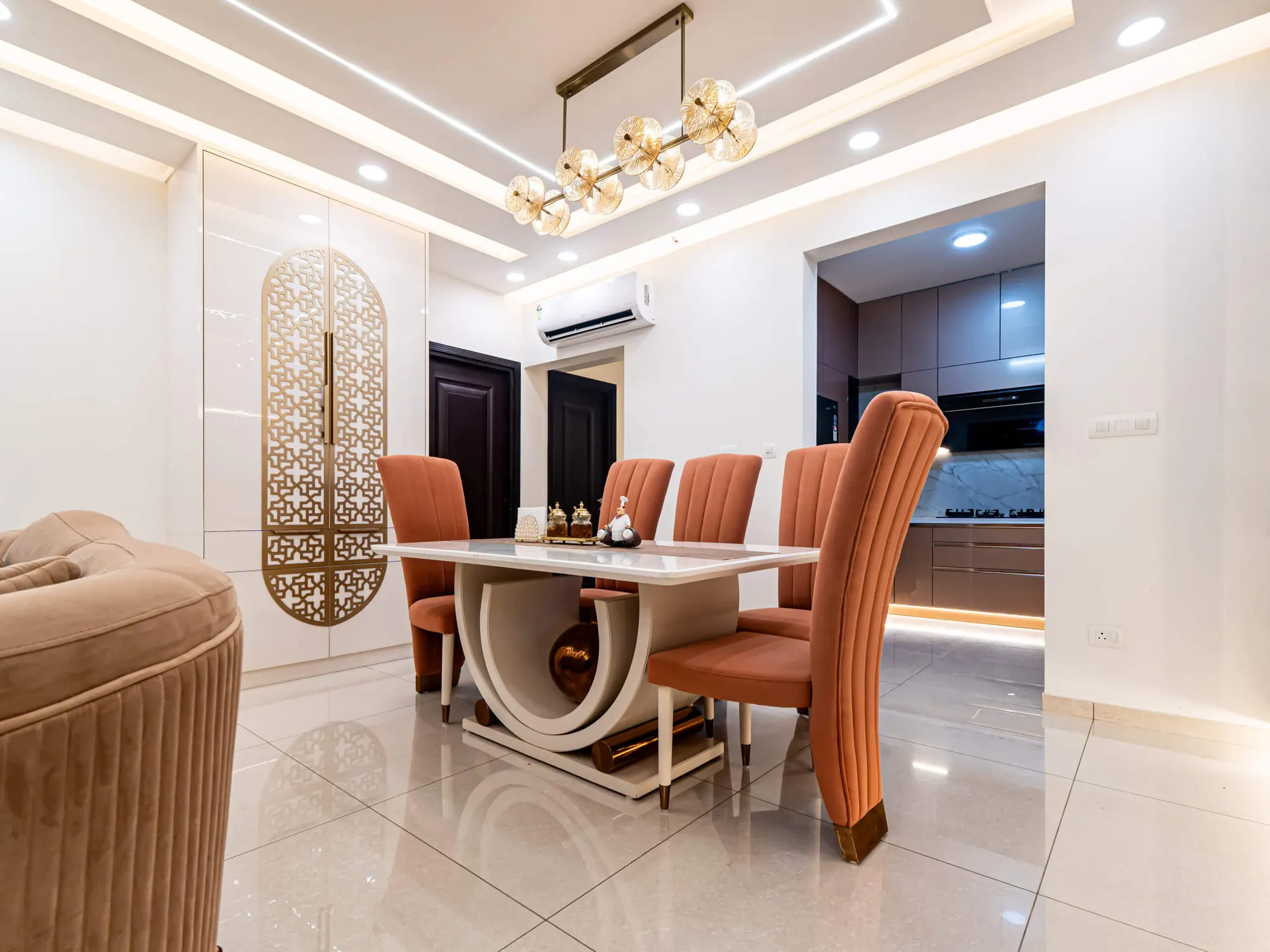
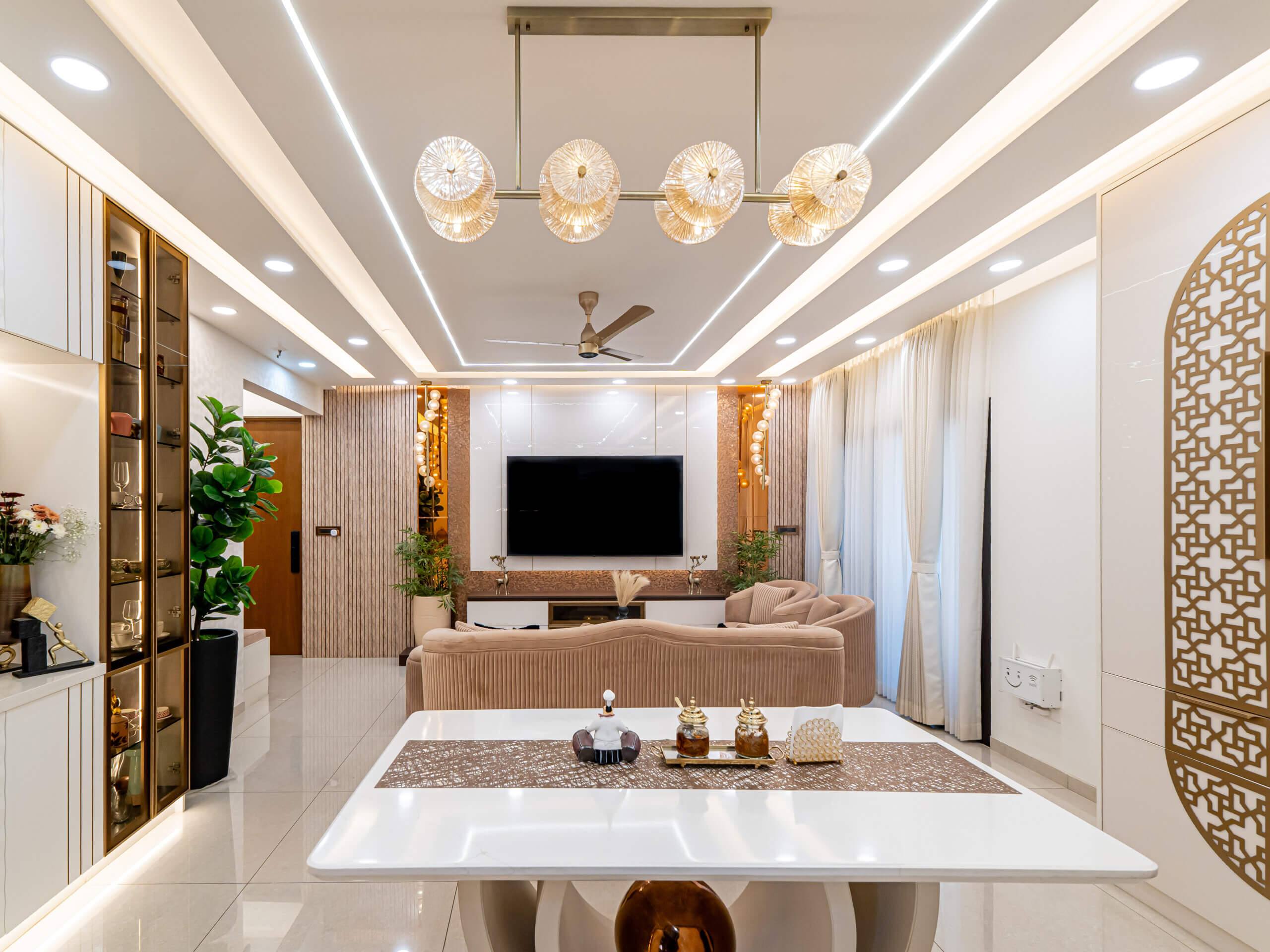
A false ceiling does two jobs. It hides the beams, the uneven slab and every wire, and it carries the light. We draw the ceiling and the lighting on the same plan, so the fan, the spots, the cove and the pendant all land where the furniture needs them.
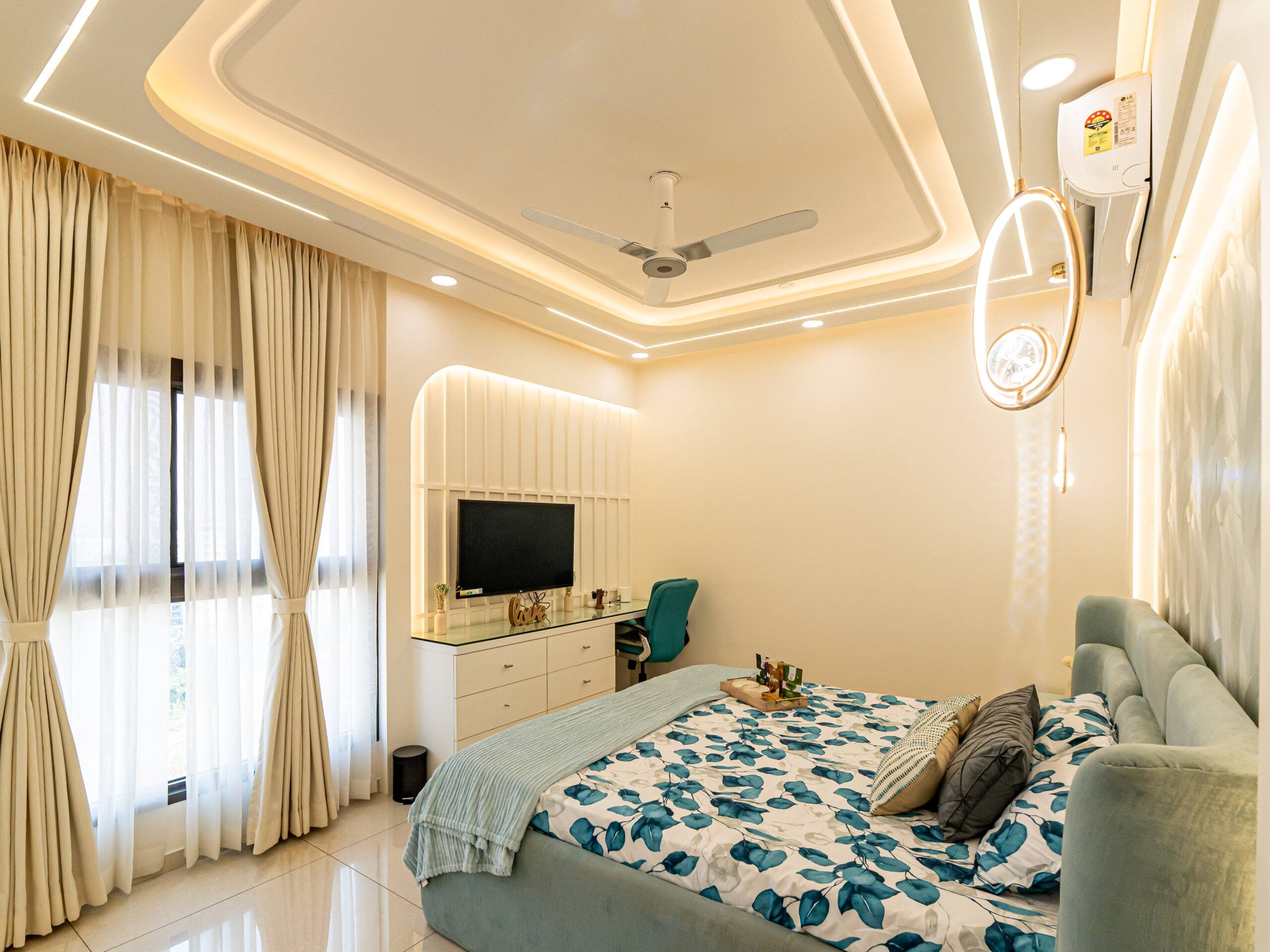
- Designs
- Cove, zig-zag, wooden planks
- Lighting
- Cove lights, profile lights, spotlights, track lights
- Colour temperature
- 2700 to 3000 K in living rooms and bedrooms
- Materials
- Moisture-resistant, fire-retardant board
- What it hides
- Beams, uneven slabs, wiring
Cove, zig-zag or wooden planks
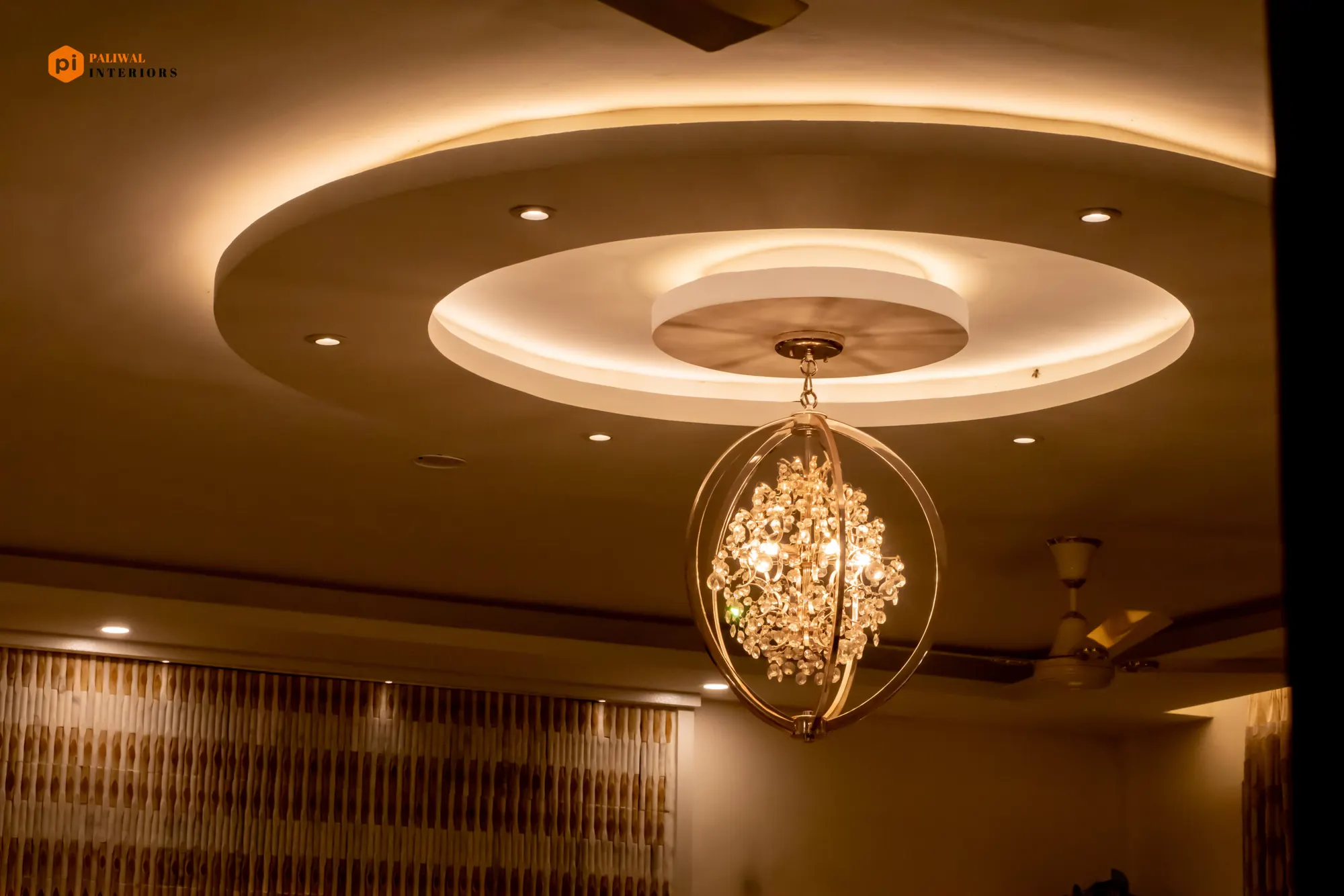
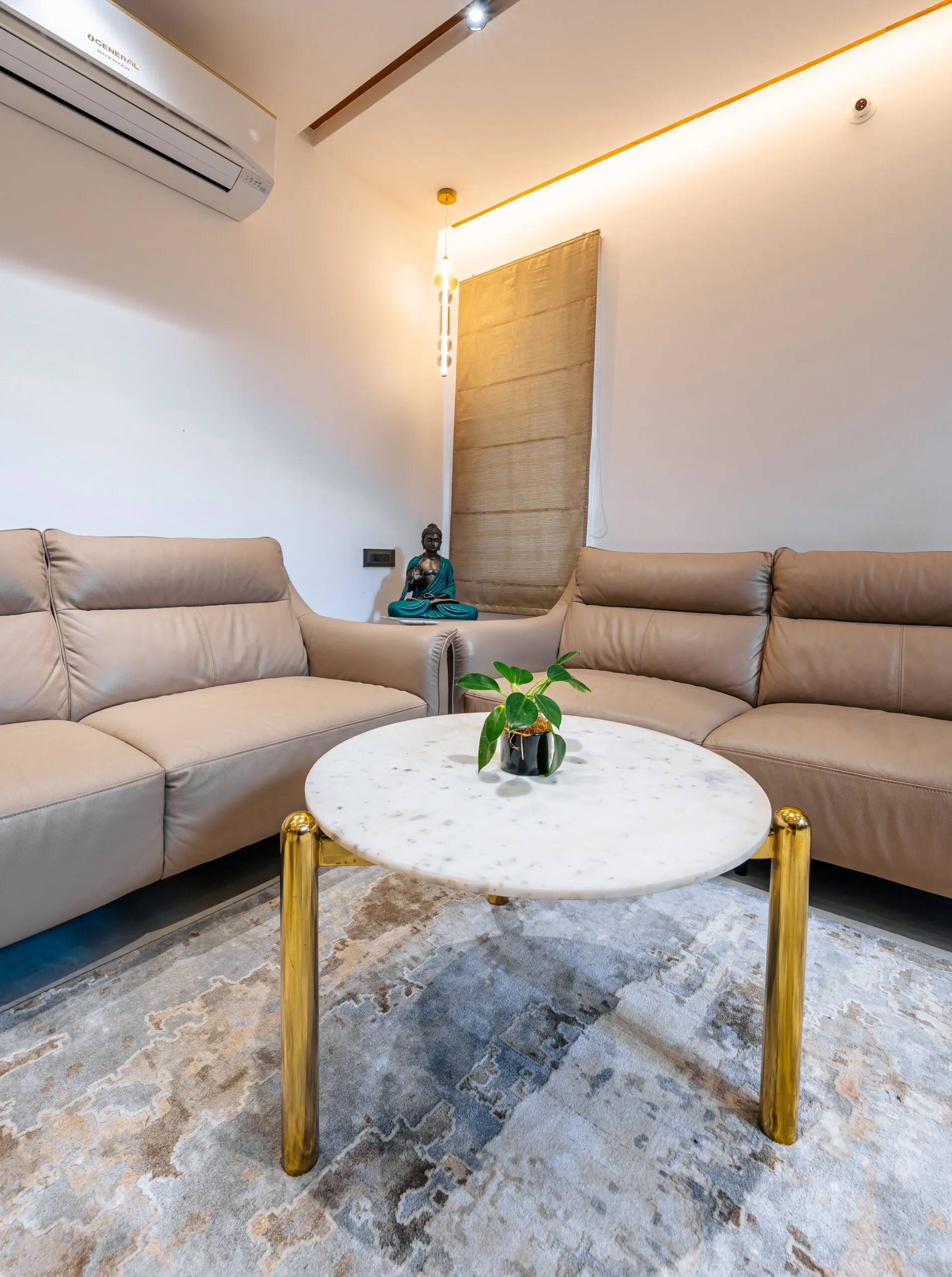
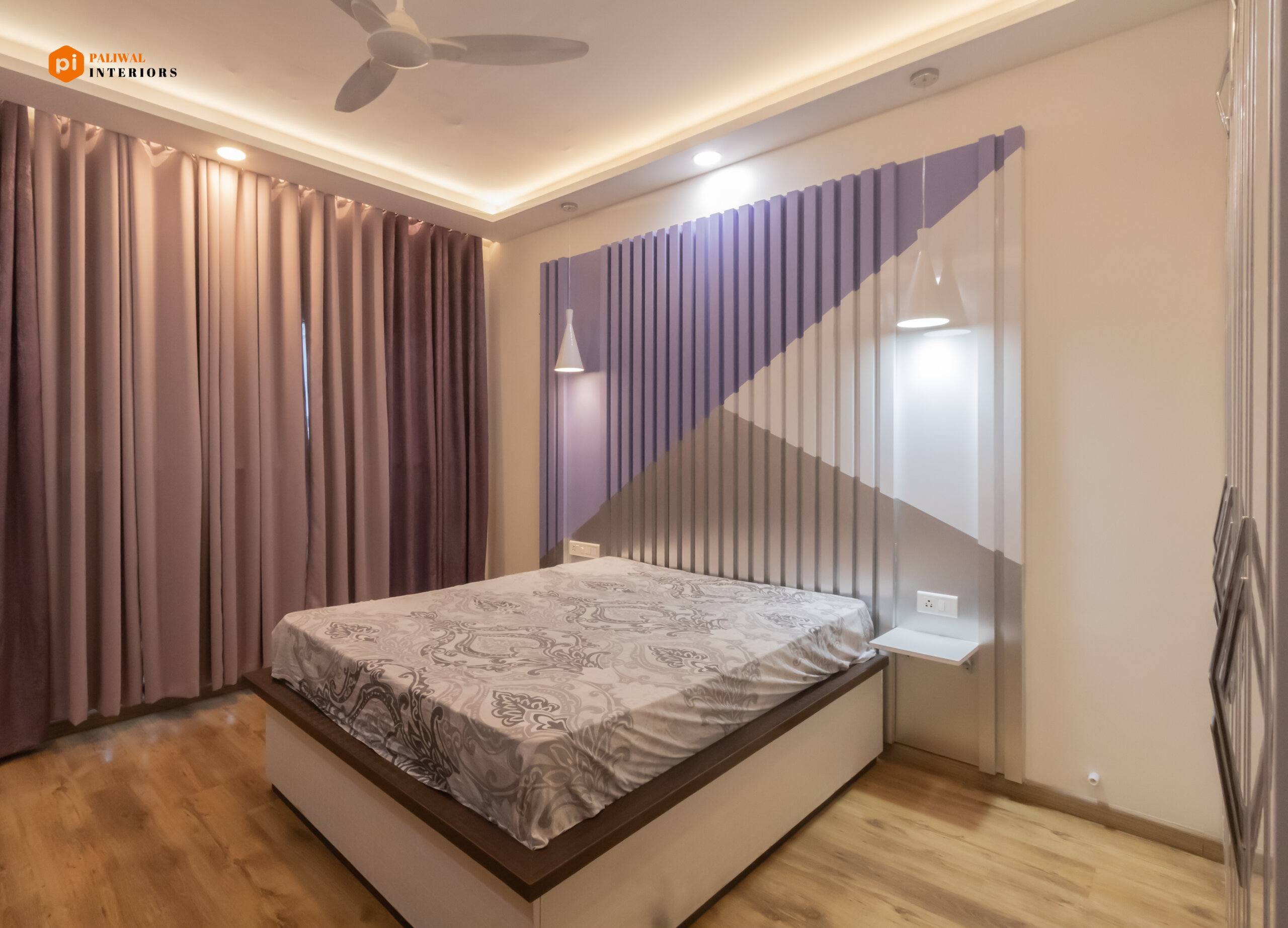
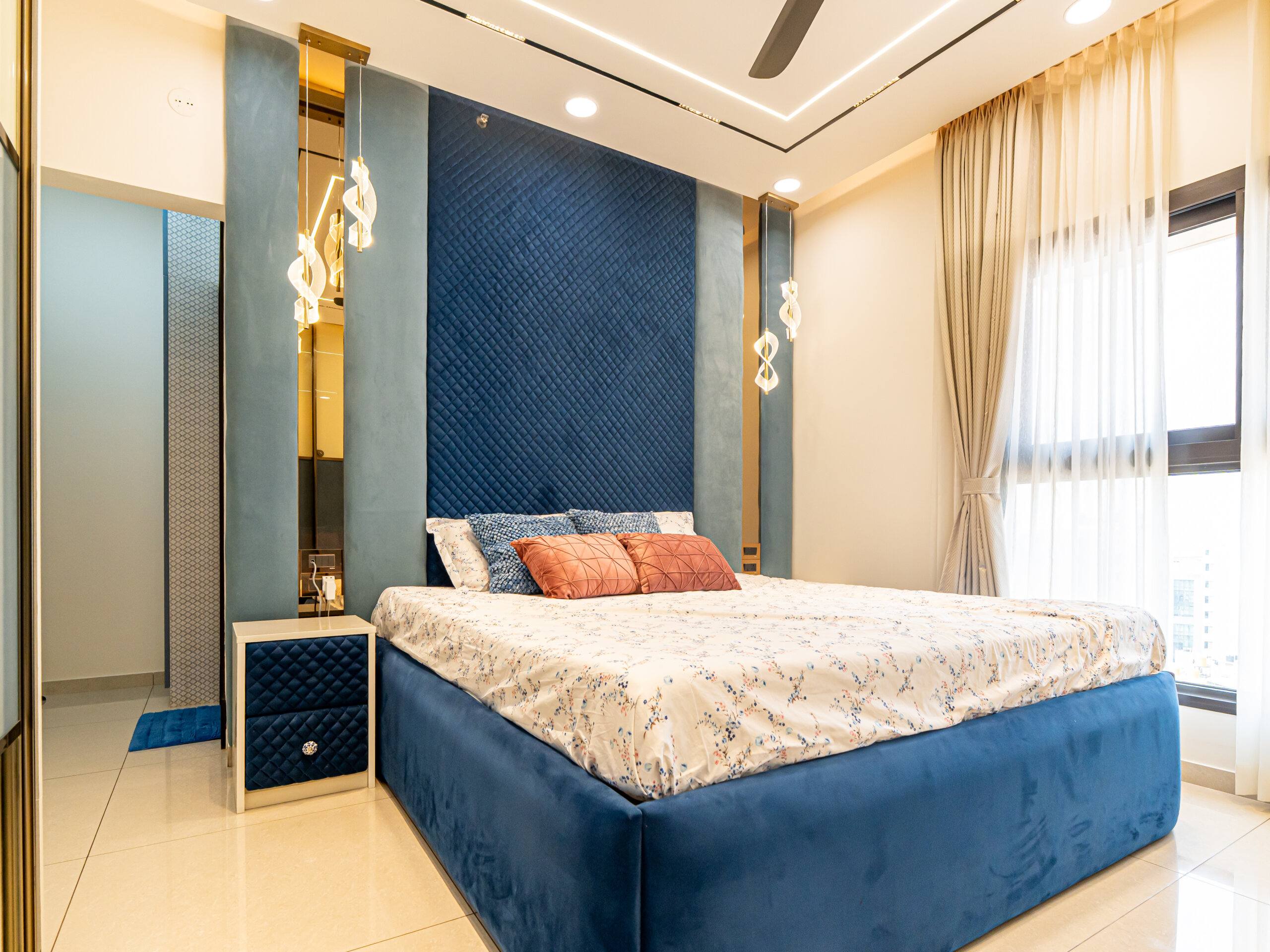
- Cove: a lowered band with a gap at the edge that hides an LED strip, so the light washes onto the ceiling with no visible fitting. It can be one band or stepped in tiers, as in the Sobha Royal Pavilion bedroom in the hero photo, where the steps carry a cove and a thin profile strip and the fan sits in the centre. The circular ceiling with the crystal pendant is a cove in two rings with recessed spots between them. In the Jigani villa living room with the jute blind, the cove runs along the top of the wall only. Keep the cove light uniform and warm.
- Zig-zag: an angled, layered design that scatters light evenly across the room and adds detail to a high ceiling.
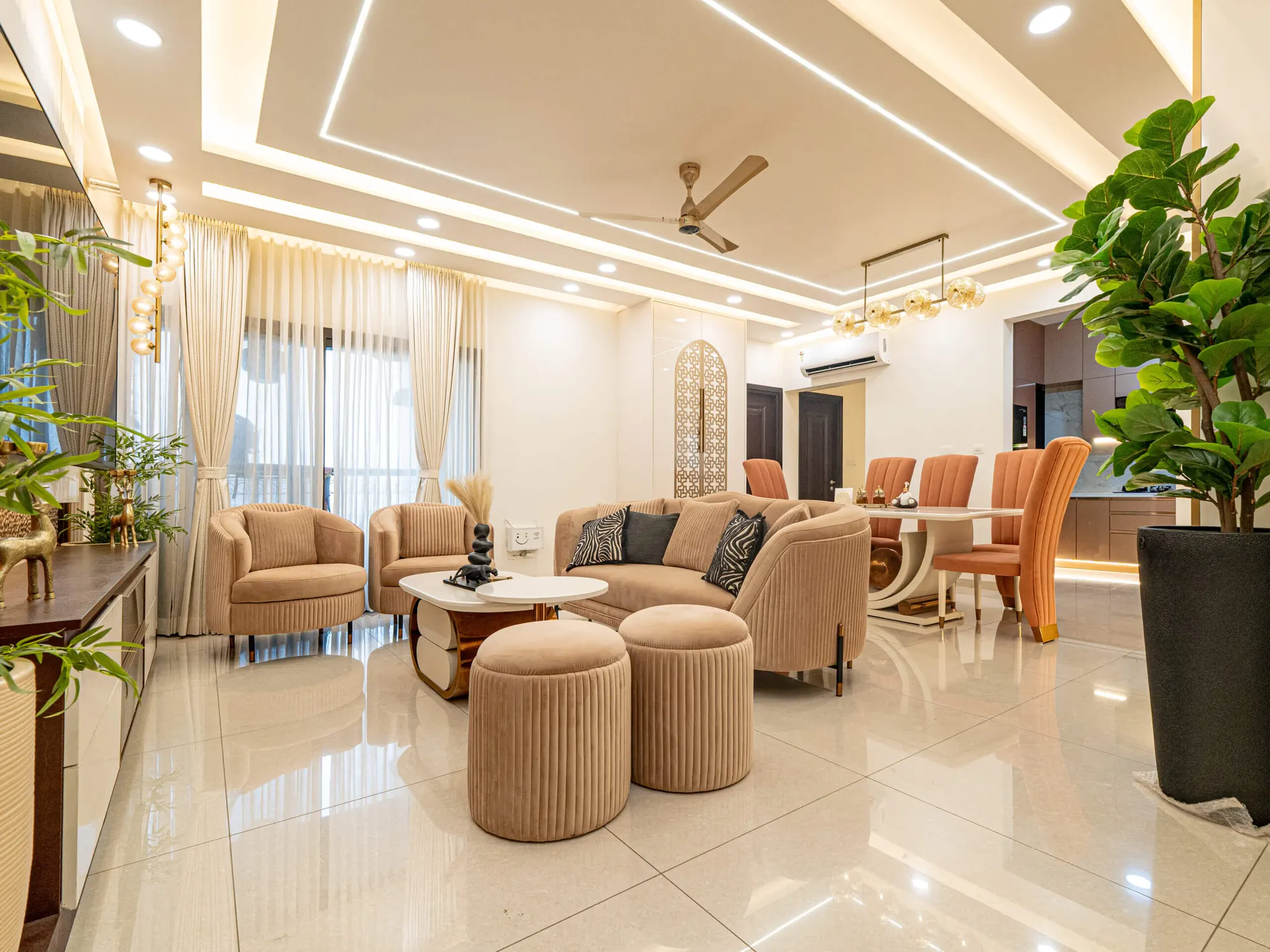
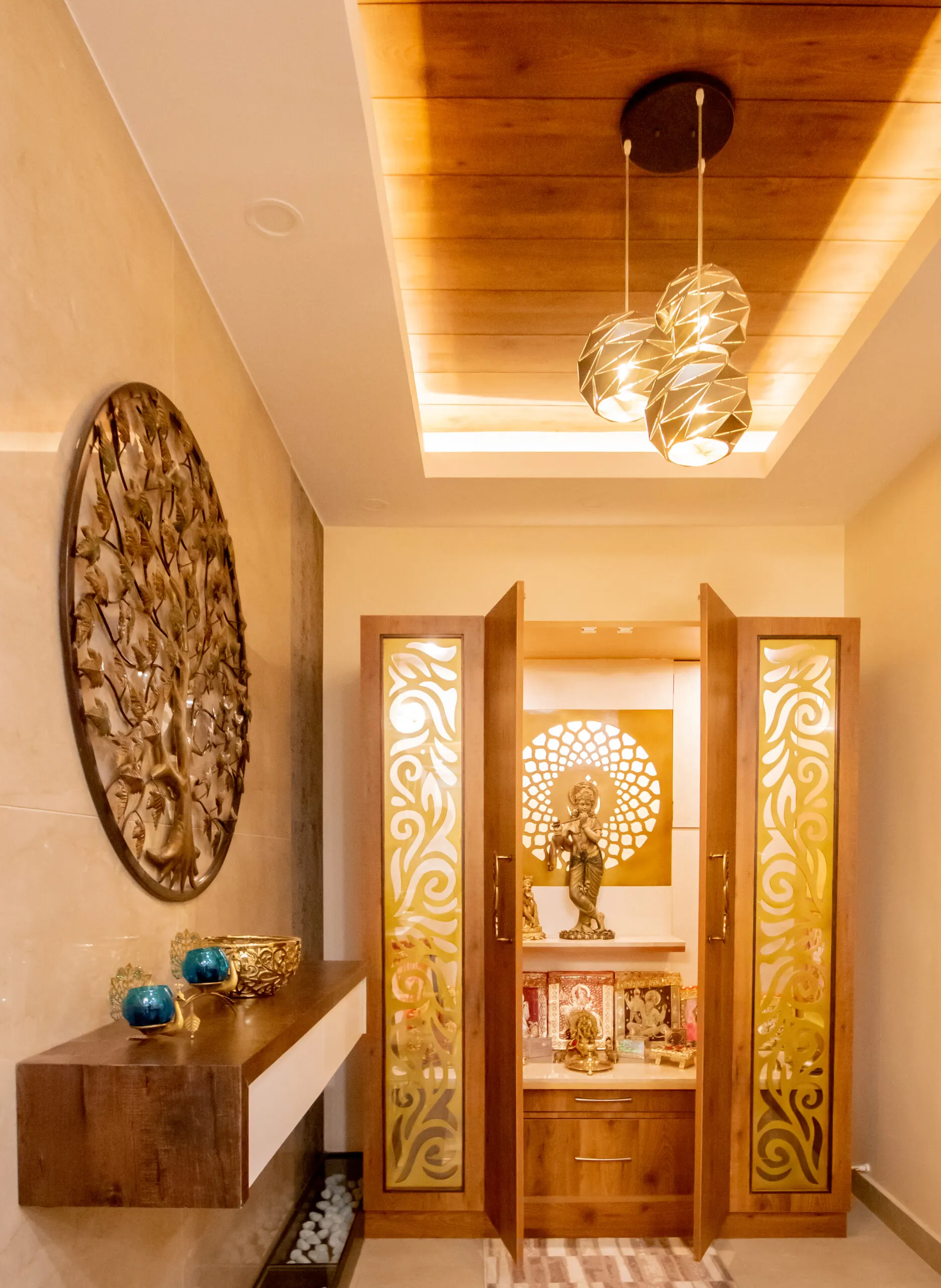
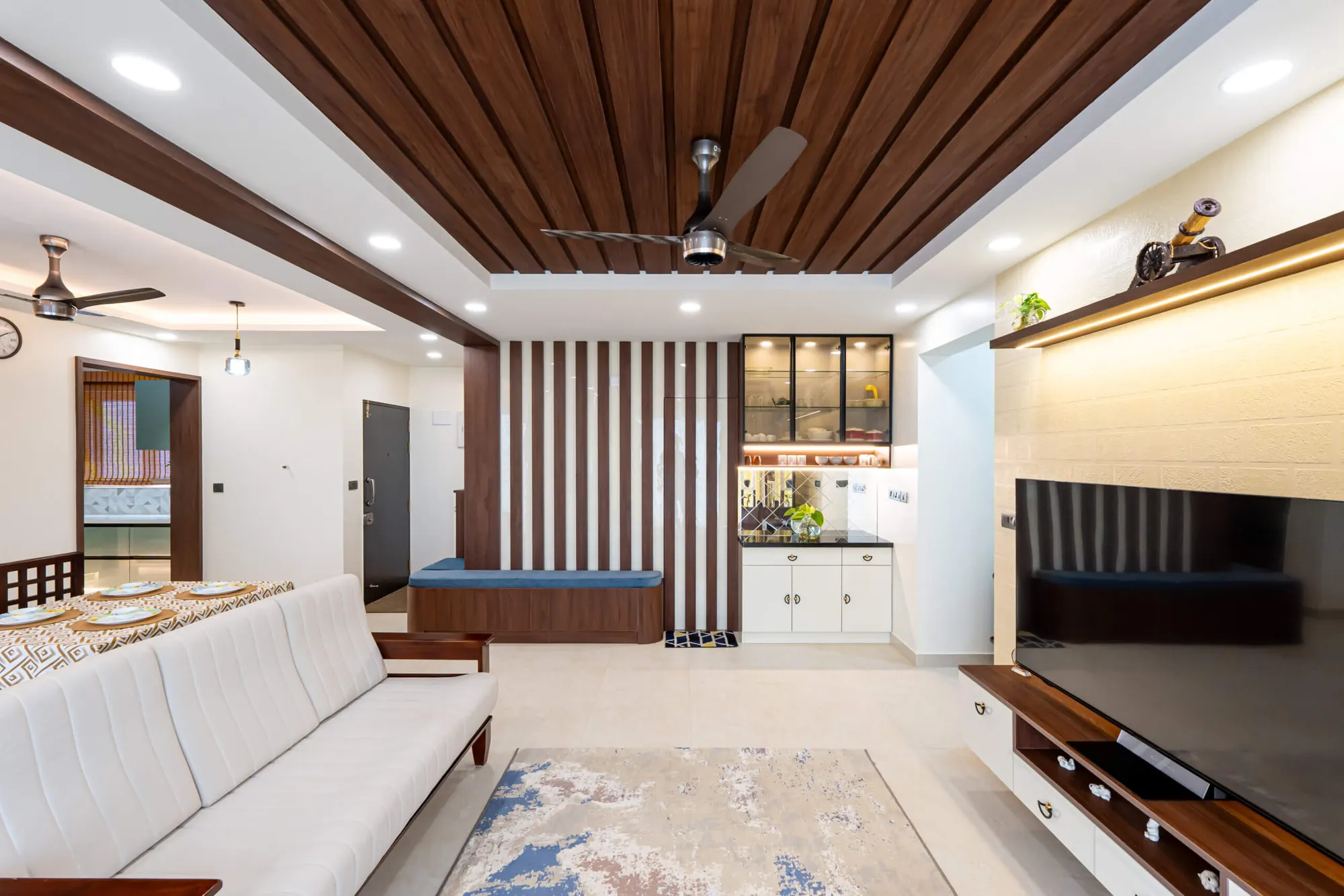
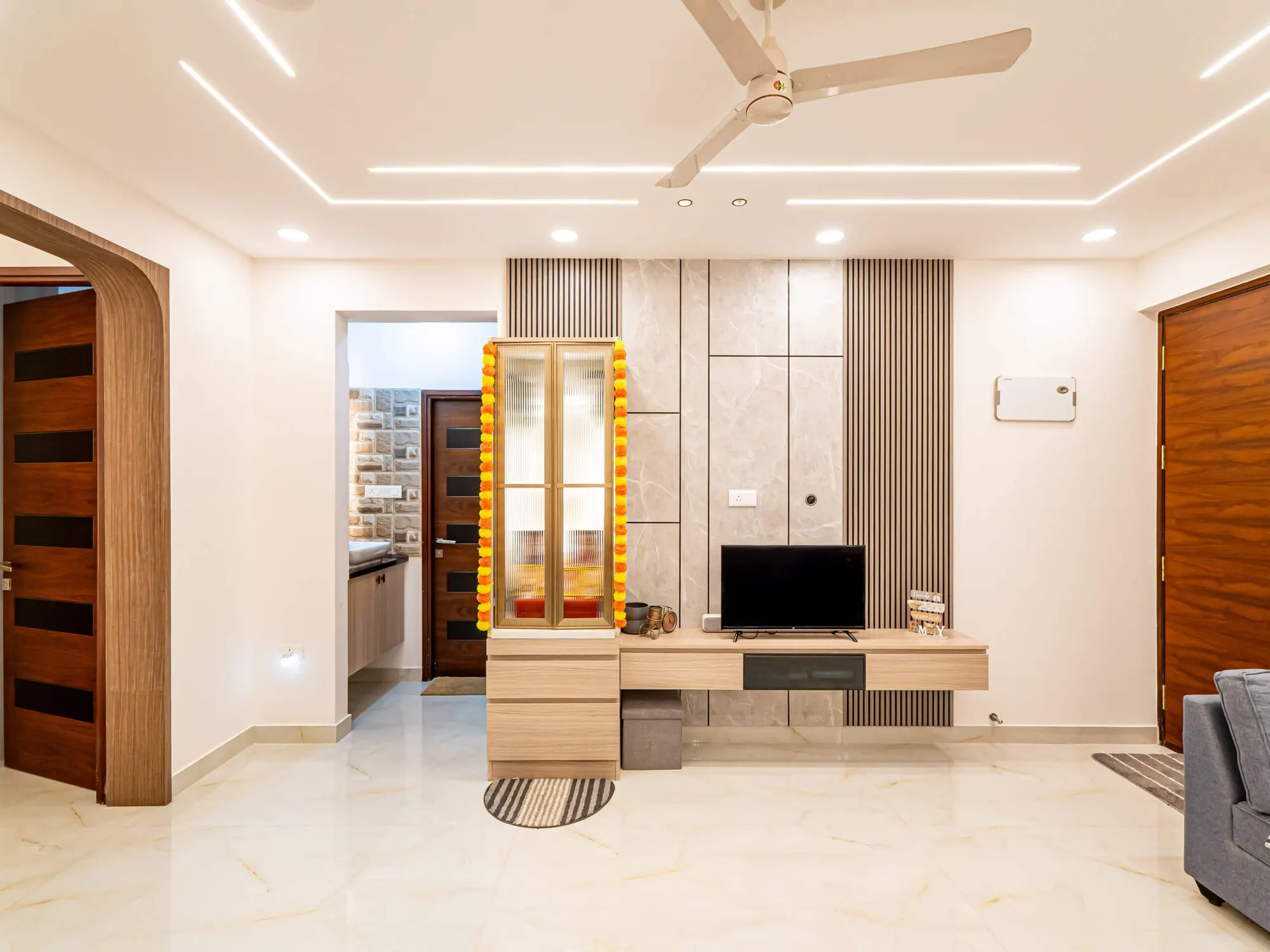
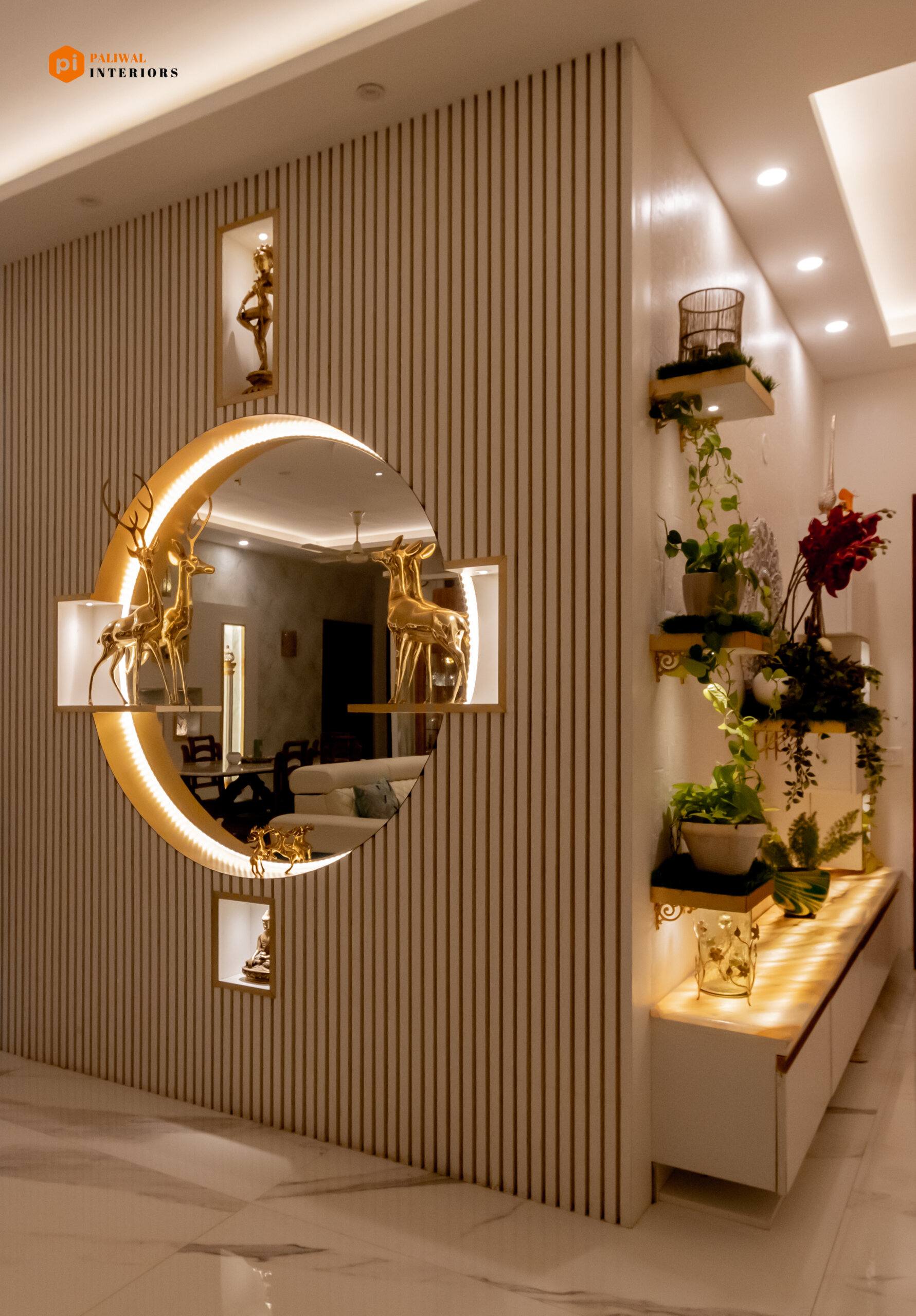
- Wooden planks: a panel of planks or slats set into the white ceiling, as in the walnut slat living room and the pooja corner with the three brass pendants.
What the ceiling hides and what it carries
Exposed beams, an uneven slab and the conduit for every light and fan are what a false ceiling covers, with one even surface. It also adds some thermal and sound insulation.
The ceiling also carries the lighting. Recessed spots, cove strips, profile lights and the hook for the pendant are all fixed into it, which is why the ceiling and the lighting plan are one drawing. The board we use is moisture-resistant and fire-retardant. Bangalore’s monsoon keeps the air damp for months, so we keep good ventilation above the ceiling.
Light in three layers, each on its own switch
One switch gives you one mood. Plan two or three layers in every room, each on its own switch and ideally its own dimmer.
- Ambient is the base: cove light, downlights or a flush ceiling light that fills the room evenly. Aim for about 10 to 20 lumens per square foot in a living room or bedroom.
- Task is focused light for a job: a reading light by the bed, a strip under the kitchen cabinets, a lamp at the desk. It goes in front of or above the work, never behind you, so your own shadow does not fall on it.
- Accent is the sparkle: a spot on a painting, a profile light down the TV wall, a lit niche. The thing you light should be about three times brighter than the light around it.
Skip a layer and the room feels either dull, hard to use or flat. A tight grid of downlights across the whole ceiling is the common mistake; it makes a home look like a showroom.
Warm in the bedroom, cooler at the desk
Colour temperature decides how your finishes look. The same teak reads rich under warm light and orange under a harsh one. We use warm white, 2700 to 3000 kelvin, in living rooms and bedrooms, and 3500 to 4000 kelvin in kitchens and study areas. Every light in a room stays the same white, because mixed whites look messy. In the bedroom the ambient layer goes on a dimmer, each side of the bed gets its own switch so one of you can read while the other sleeps, and no downlight sits directly over the pillow.
Decide the lighting before the ceiling is closed
Lighting is easy to plan and expensive to fix. Cove and profile lights need depth in the ceiling, and the conduits and points have to be in place before the board goes up. So we start from the furniture layout, not the ceiling: where the bed, sofa, dining table and desk go first, then the lights to match. Every light, switch and dimmer is marked on the plan and shown in 3D before anything is installed.
The spend goes on good drivers, dimmers and colour accuracy, because poor quality shows up as flicker, heat and early failure, and cheap LED strips in particular tend to fail in the humid months. Decorative pendants can be added later. In an apartment we keep the wiring concealed, do not touch common lines and check your sanctioned load before adding lights, appliances or air conditioners.
The work
False ceilings and lighting, as built.
9 photos · tap to enlarge
Homes with this work
See it in a finished home.
Sobha Royal Pavilion
3 BHK apartment, Sarjapur Road · 48 photos
Prestige Shantiniketan
3 BHK apartment, Whitefield · 47 photos
Before you call
Questions people ask us
What does a false ceiling actually do?
It hides exposed beams, uneven slabs and the wiring, and it gives the cove lights, profile lights, spots and fan a place to sit. It also adds some thermal and sound insulation.
Which light colour should I choose?
Warm white, about 2700 to 3000 kelvin, in living rooms and bedrooms. Kitchens and study corners work better at 3500 to 4000 kelvin. Avoid very cold white at home.
Will a false ceiling make my room feel low?
In a room with a modest ceiling height we use a slim cove, wall lights and compact fittings rather than a bulky chandelier. Light colours and a well-placed mirror also make a compact room feel brighter.
Can I change the lighting later without opening the ceiling?
The cove and profile lights need depth in the ceiling and the wiring has to be in before it is closed, so decide those early. Floor lamps, table lamps and surface track lights can be added any time.
Can I get layered lighting without a false ceiling?
Yes. Wall lights, floor lamps, table lamps, surface track lights and stick-on LED strips give you ambient, task and accent layers without touching the ceiling.
Often done together
Related services
Tell us about your home.
A site visit, a 3D design and an itemised estimate, free. Most homes are handed over in 45 to 60 working days.