
Wood finishes
Polish that brings the grain back and protects it
Wood dulls, scratches and darkens with use. A new coat of polish brings the grain back up, puts a hard layer between the timber and moisture, and should not need doing again for ten to fifteen years when it is done properly.
- Finishes
- Lacquer, wax, varnish, polyurethane (PU), shellac
- Sheen
- Gloss, satin or natural
- What gets polished
- Doors, windows, cabinets, cupboards, furniture, wooden flooring
- PU finish
- Water-resistant, so it suits kitchen cabinets, doors and floors
- How often
- Once in ten to fifteen years, if the work is done well
What a polish actually does
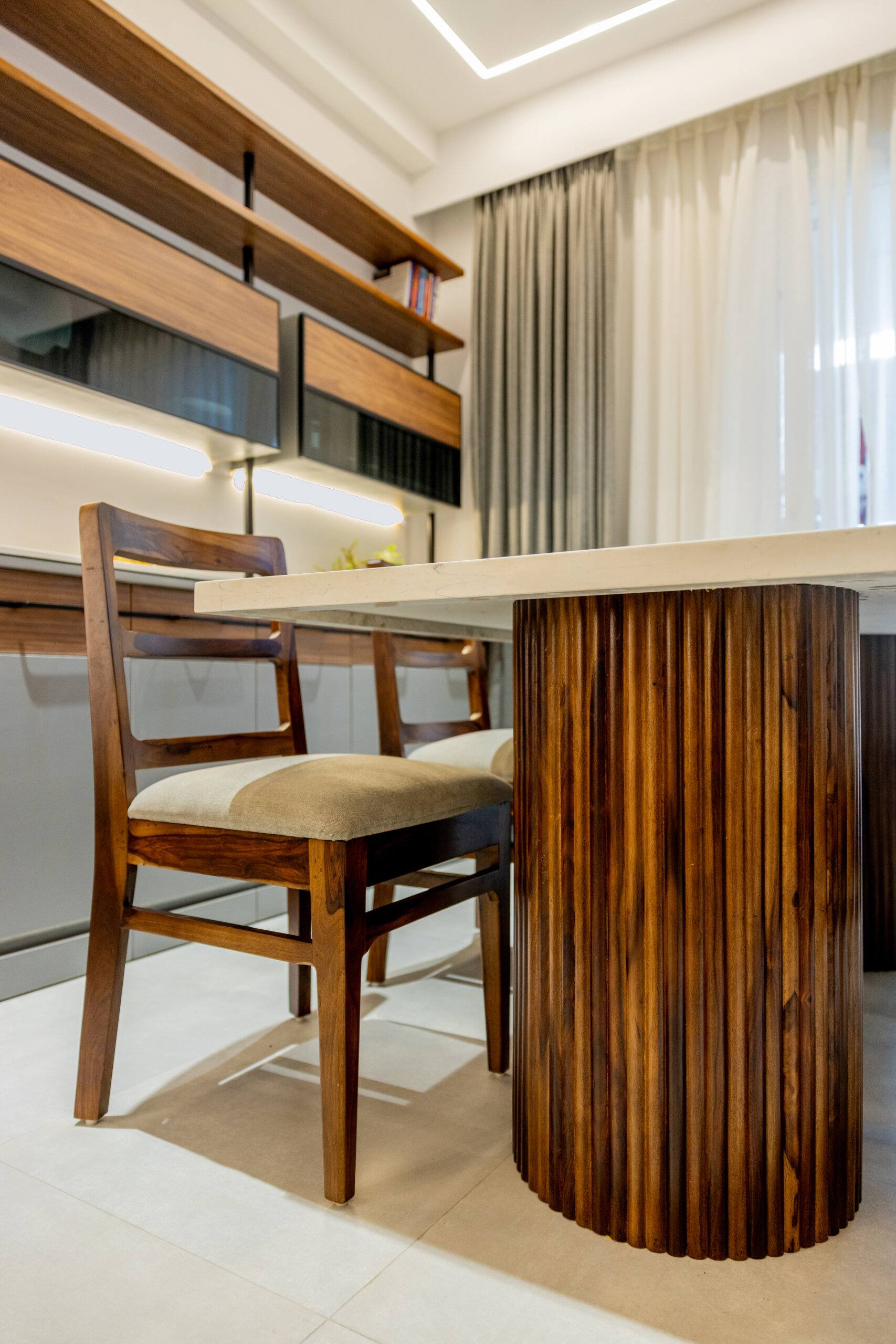
Polish is not a cosmetic wipe. The finishes used on furniture are surface finishes: they do not sink into the timber but set as a hard, thick layer on top of it. That layer does two things at once. It brings out the natural qualities of the wood and its grain, restoring the shine that use has dulled. And it keeps moisture and other harmful agents from touching the wood directly.
The teak chairs and the fluted wooden pedestal in the photo at the top of this page are from a 3 BHK at Prestige Ferns City. The grain is visible and the surface is even, which is what a finish is for.
Lacquer, wax, varnish, PU or shellac
The protective layer can be lacquer, wax, varnish, polyurethane (PU) or shellac. They are all surface coats, but they are not interchangeable, and the choice depends on where the wood is and what it goes through.
Polyurethane is the one to ask for on anything that meets water. It is water-resistant and durable, which makes it suitable for kitchen cabinets, cupboards, doors, windows and wood flooring, as well as almost all kinds of furniture. It adds to the life of the piece, not only its looks. The other finishes have their own uses, and part of the job is matching the finish to the piece rather than putting one product on everything.
Gloss, satin or natural
Polyurethane is sold in varieties that give a gloss, a satin or a natural look to the wood. Gloss reflects the most light. Natural is the choice when you want the wood to look like timber rather than a coated surface. Satin sits between the two.
Sheen is a decision to make before the work starts, because it is part of the finish itself. Look at the pieces in the same room together. A high-gloss console beside a matt teak door will read as two different materials even if both are teak.
The pieces that need it first
The wood that gets handled and wetted most is the wood that dulls first: doors, windows, kitchen cabinets, cupboards and floors, then the furniture you use every day.
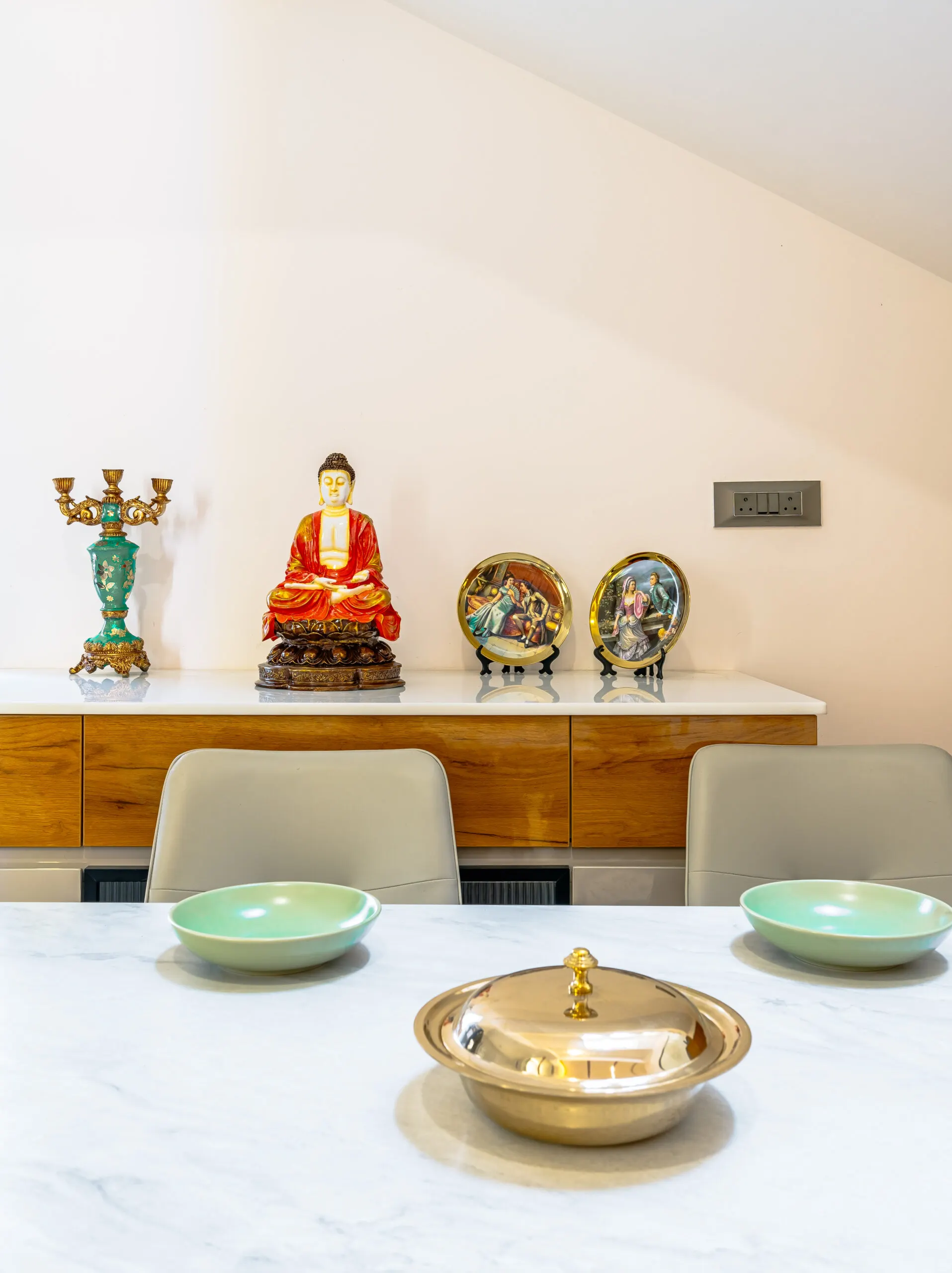
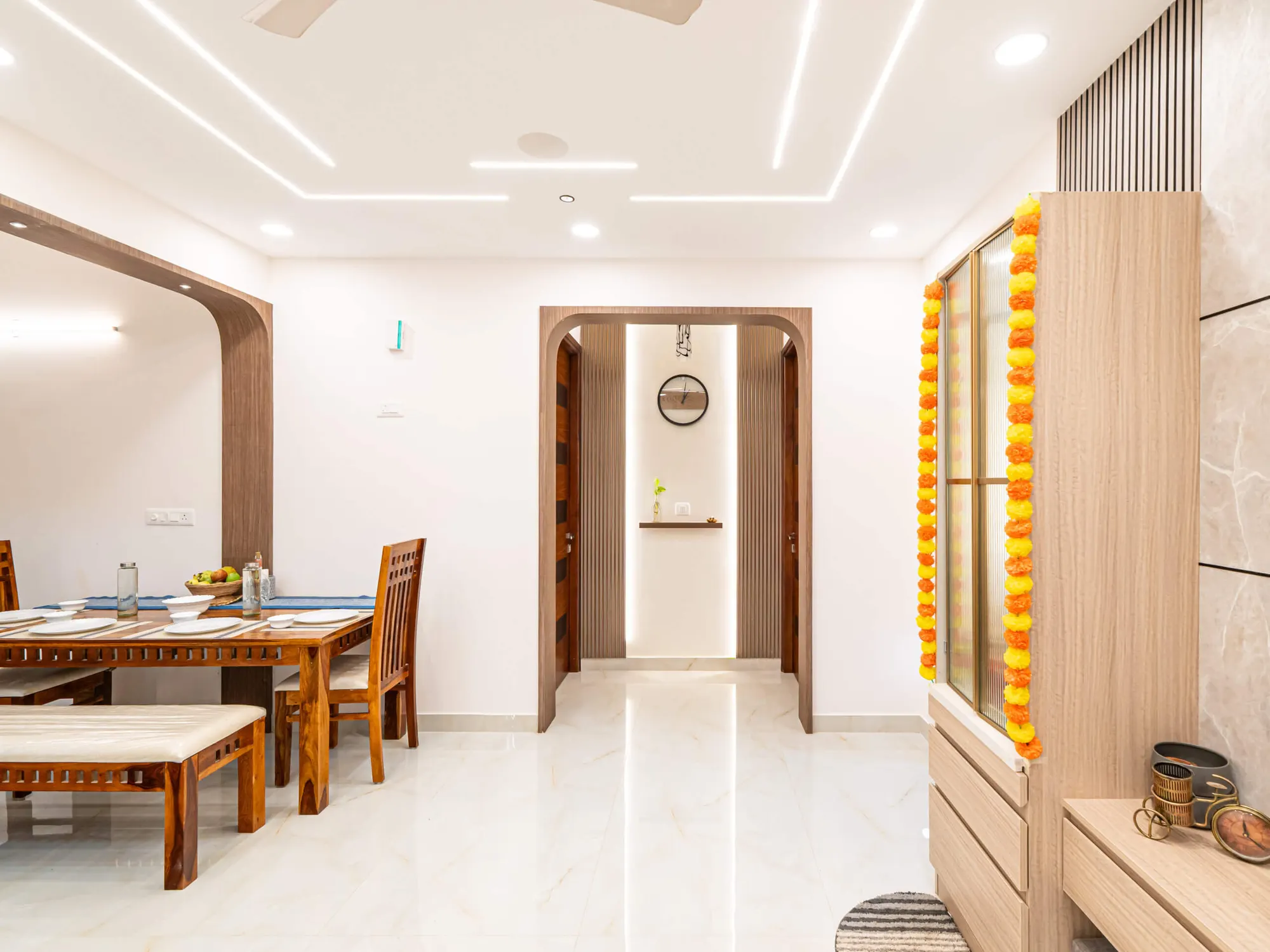
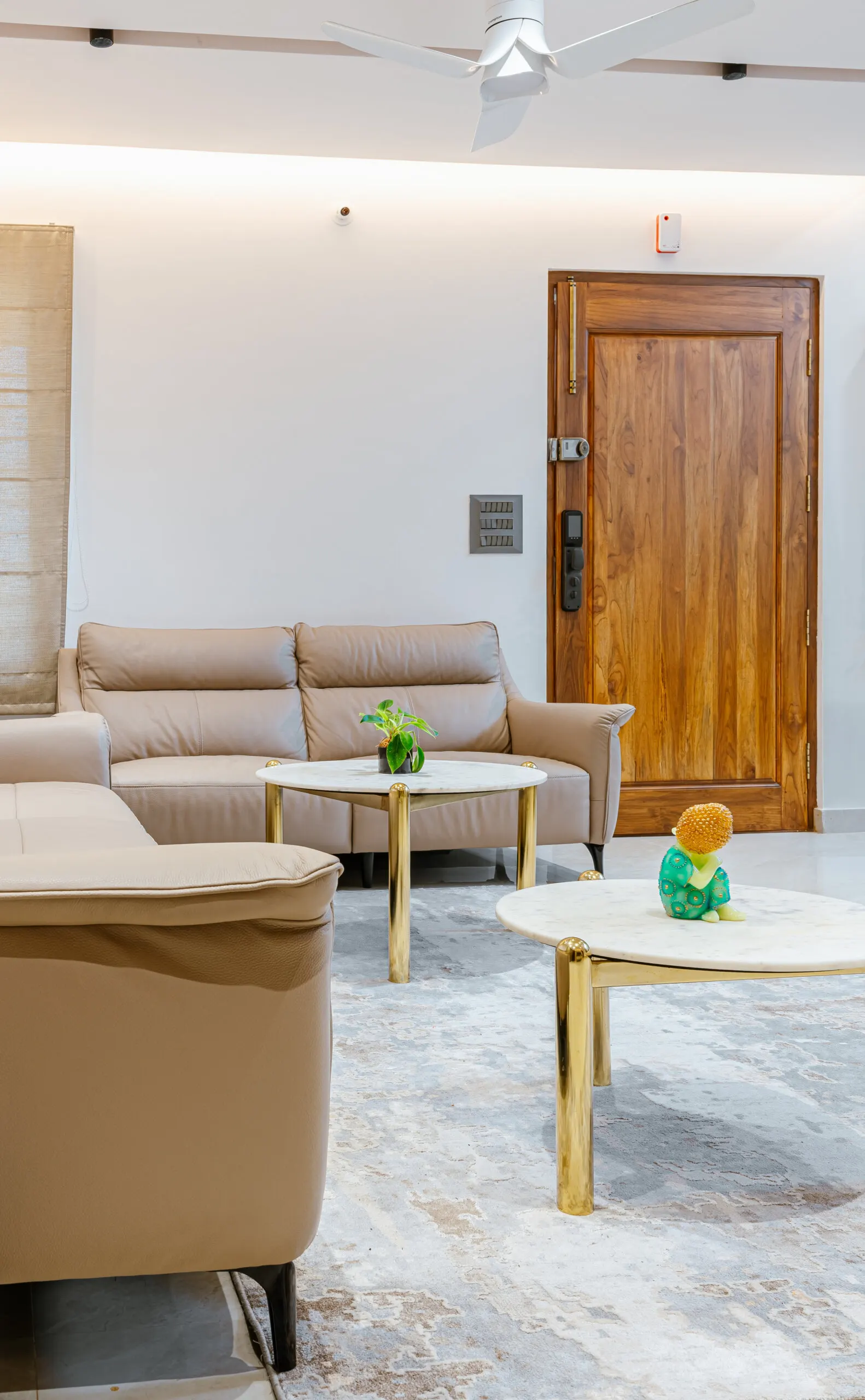
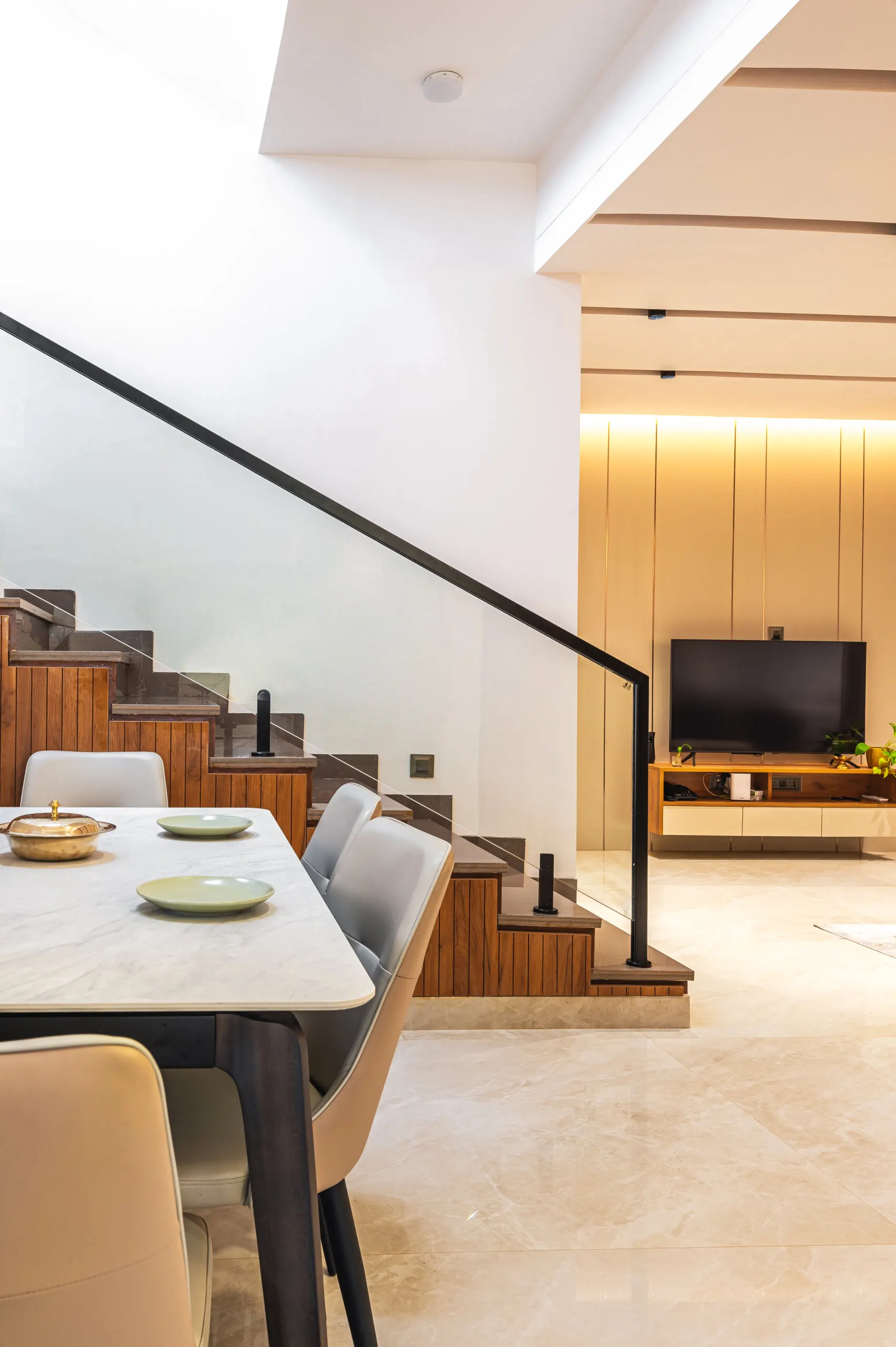
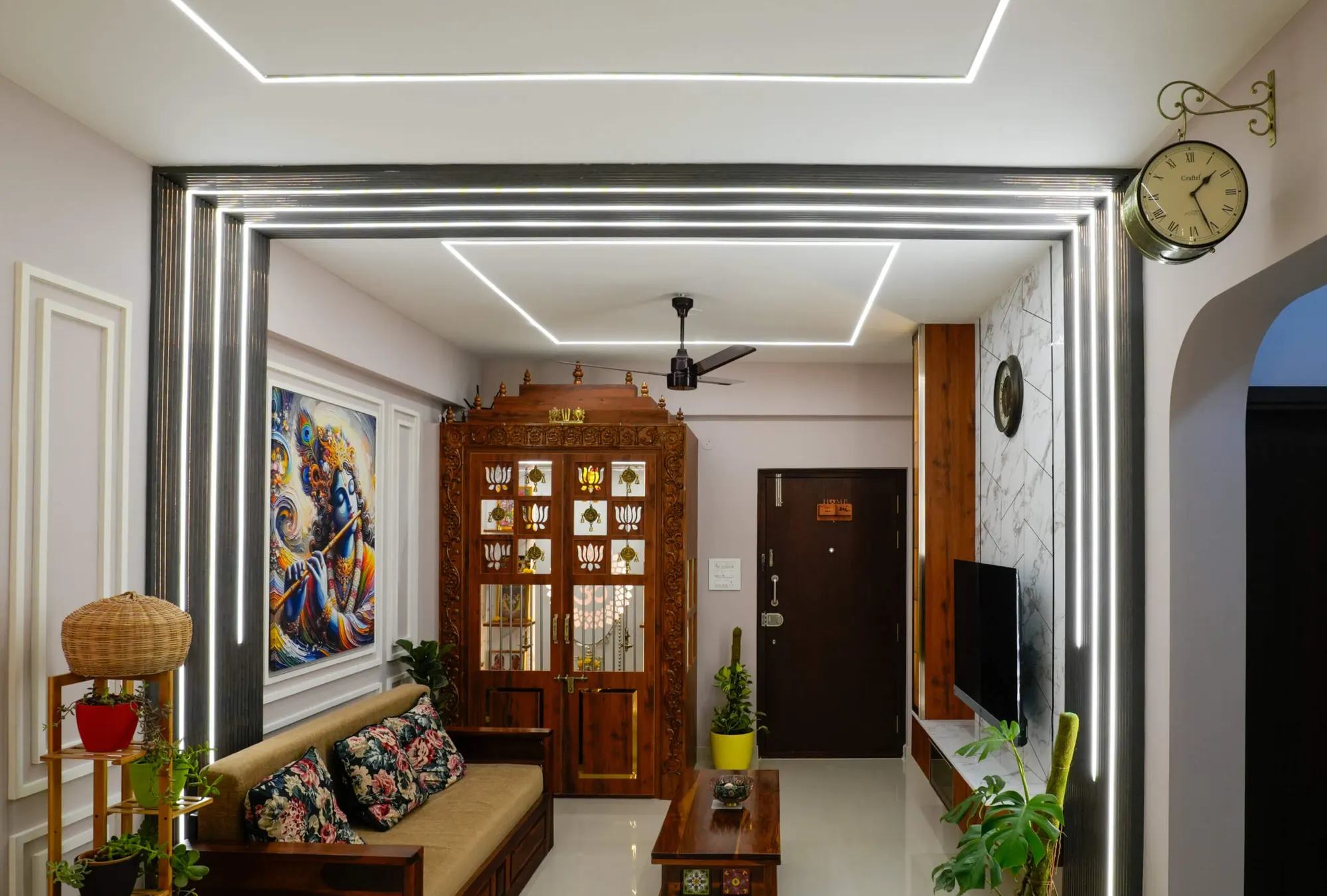
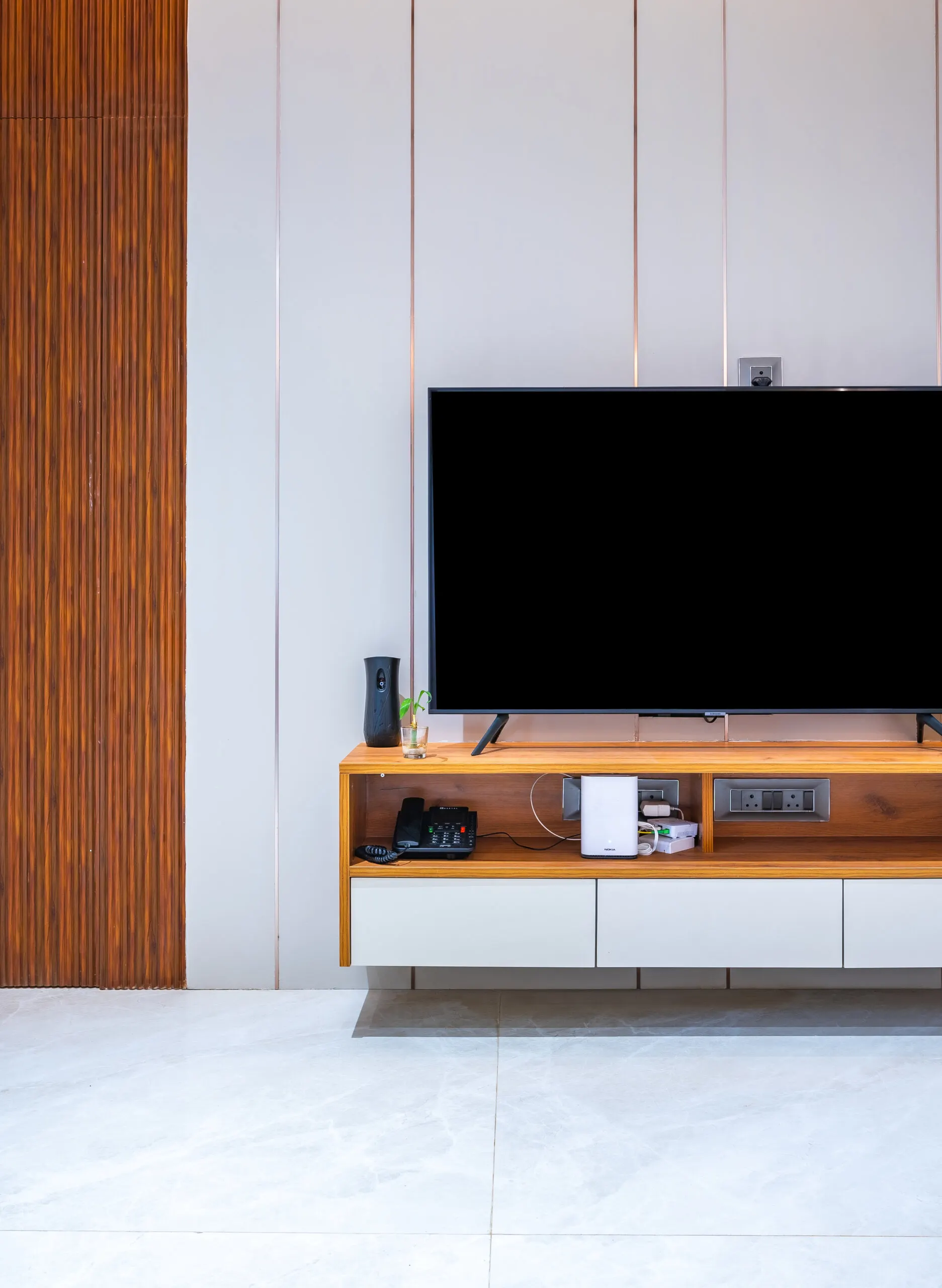
In the homes on this page that means the teak main door with its digital lock at the villa in Jigani, the sideboard and the staircase with wood-slat risers in the same house, and the carved teak cabinet, sofa and tile-inlaid coffee table in the living room with the Krishna painting. Veneered pieces such as the walnut crockery unit from Prestige Ferns City are finished the same way as solid timber.
Done properly, it lasts ten to fifteen years
Polishing is not something a home needs often. If you have it done once, the next coat may be ten to fifteen years away. That is the whole argument against choosing the lowest quotation. A cheap job can charge a modest fee and still leave a poor finish, and you then live with that result, on a door you touch every day, for years.
A low price is also the usual bait: a quotation that promises branded material at a rate that does not cover branded material is a warning, not a bargain. Price should never be the main reason you pick who does the work.
What to ask before you say yes
When you compare quotes, ask what finish will be used and in which sheen, what brand of material, and how long the work will take. Then look at the person or company behind the quote: their experience, reviews and complaints, whether they come through a source you trust, and whether they have a website you can check. Those tell you more about the finish you will get than the number at the bottom of the page.
We have been designing and building interiors in Bangalore for over fifteen years, from a studio in Sarjapura. The teak doors, dining sets, sideboards and cabinets in the photographs on this page are from homes we handed over.
The work
Furniture polish, as built.
8 photos · tap to enlarge


Walkthroughs
Filmed on handover day.

Before you call
Questions people ask us
How often does wooden furniture need polishing?
Not often. A finish that is applied properly lasts ten to fifteen years before the wood needs doing again, which is why it is worth getting right the first time rather than taking the cheapest quote.
Which finish should I ask for?
It depends on where the wood is. Polyurethane is water-resistant and durable, so it suits kitchen cabinets, cupboards, doors, windows and wooden flooring. Wax, varnish, lacquer and shellac are the other surface finishes. Polyurethane comes in varieties that give a gloss, satin or natural look.
Does polish just make the wood shine, or does it protect it?
Both. A surface finish does not soak into the wood; it sets as a hard, thick layer on top, so moisture and everyday wear meet the finish rather than the timber underneath.
Can you polish doors and windows, not only furniture?
Yes. Doors, windows, kitchen cabinets, cupboards and wooden flooring take the same surface finishes as furniture. Polyurethane suits them best because it is water-resistant.
Often done together
Related services

Tell us about your home.
A site visit, a 3D design and an itemised estimate, free. Most homes are handed over in 45 to 60 working days.